Roses are heavy feeders, especially when they’re growing vigorously and producing flowers throughout the season.
This post may contain affiliate links.
Fortunately, fertilizing roses isn’t complicated. A little attention to when you feed them and what kind of fertilizer you use can make a big difference in the health of your plants and the number of blooms you get.
If you’re growing roses in a cottage garden, keeping them well fed can help them stay strong through a long growing season.
When Should You Fertilize Roses?
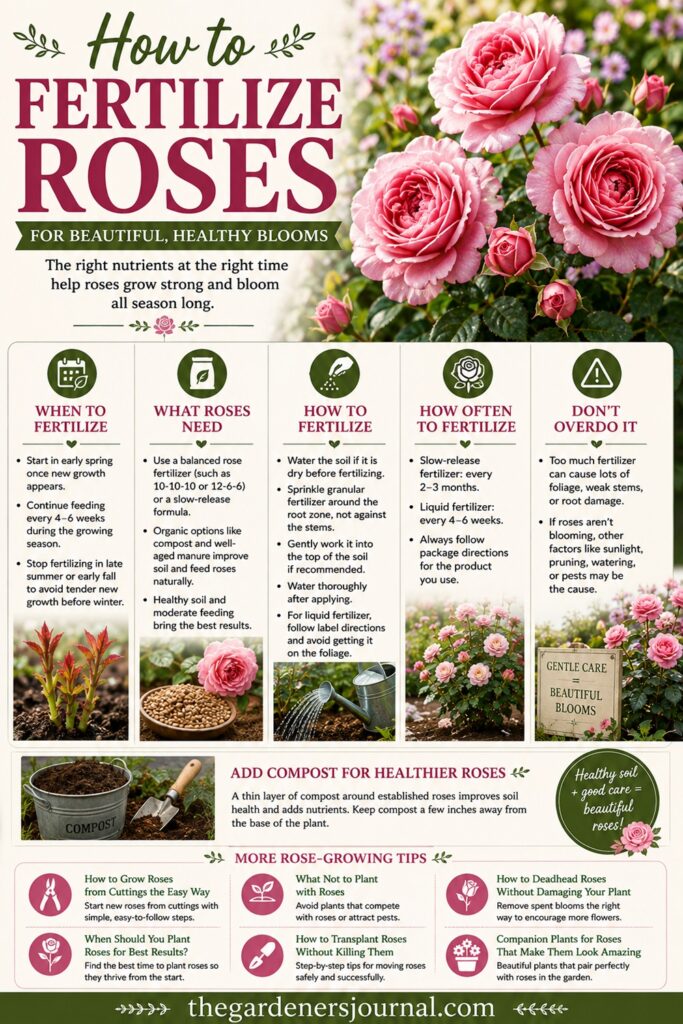
The best time to begin fertilizing roses is in spring, once the plants have started putting on new growth.
Wait until you see new leaves and stems developing rather than fertilizing immediately when the weather first warms up.
This gives you a better indication that the plant is actively growing and ready to use the nutrients.
For roses that bloom repeatedly throughout the summer, you can continue feeding them periodically during the growing season.
Stop fertilizing in late summer or early fall, depending on your climate. You don’t want to encourage tender new growth right before winter.
What Kind of Fertilizer Do Roses Need?
Roses benefit from a fertilizer that provides nitrogen, phosphorus, and potassium, along with other nutrients they may need.
A balanced rose fertilizer or slow-release fertilizer is an easy choice for most home gardens. Follow the application instructions on the package because fertilizer concentrations vary.
Organic options such as compost and well-aged manure can also help improve the soil around roses while providing nutrients.
The goal isn’t to give your roses as much fertilizer as possible. Healthy soil and consistent, moderate feeding are more important than heavy applications.
How to Fertilize Roses
Before fertilizing, water the soil around your roses if it is dry.
Apply granular fertilizer around the root zone, keeping it away from the main stem of the plant. Gently work it into the surface of the soil if the product directions recommend doing so.
Water thoroughly afterward.
If you’re using a liquid fertilizer, apply it according to the package directions and avoid getting concentrated fertilizer directly on the foliage unless the product specifically says it can be used that way.
How Often Should You Fertilize Roses?
How often you fertilize depends on the type of fertilizer you’re using.
Slow-release fertilizers may only need to be applied a few times during the growing season, while liquid fertilizers are generally used more frequently at a lower concentration.
Always follow the directions for the specific fertilizer you’re using rather than assuming more frequent applications will produce more flowers.
Don’t Over-Fertilize Your Roses
It can be tempting to think that more fertilizer means more blooms, but that’s not necessarily the case.
Too much fertilizer can lead to excessive leafy growth, weak stems, root damage, or other problems.
If your roses are growing vigorously and blooming well, there’s no reason to keep increasing the amount of fertilizer.
And if your roses aren’t blooming, fertilizer may not be the only issue.
Sunlight, pruning, watering, pests, disease, and the variety of rose you’re growing can all affect flowering.
Add Compost to Your Rose Garden
One of my favorite ways to support healthy roses is to improve the soil with compost.
A thin layer of compost around established roses can add organic matter and help maintain healthy soil. Just keep it a few inches away from the base of the plant rather than piling it against the stems.
This is especially useful in a cottage garden where roses are growing alongside other flowers and perennials.
A Few More Rose-Growing Tips
Fertilizing is only one part of keeping roses healthy.
If you’re growing roses from cuttings, How to Grow Roses from Cuttings the Easy Way has some tips for getting new plants started from existing roses.
Once your roses are established, deadheading can encourage many varieties to keep producing flowers. See How to Deadhead Roses Without Damaging Your Plant for tips on removing spent blooms without harming the plant.
If you’re adding roses to an established garden, When Should You Plant Roses for Best Results? can help you choose the right time to get them started.
And if you’re moving an established rose, take a look at How to Transplant Roses Without Killing Them (Easy Step-by-Step Guide) before you dig it up.
Roses don’t always appreciate being moved, so a little preparation can make the process much easier.
Choosing Rose Companions
Roses also look beautiful growing alongside other cottage garden flowers. Companion Plants for Roses That Make Them Look Amazing has ideas for flowers and plants that pair beautifully with roses.
Just remember that not every plant makes a good neighbor. Before adding something new nearby, check What Not to Plant with Roses so you don’t accidentally create competition for sunlight, water, or nutrients.
With good soil, plenty of sunlight, regular watering, and moderate fertilizing, roses can reward you with beautiful blooms throughout the growing season.
And once you’ve established a good feeding routine, rose care doesn’t have to be complicated.
Follow my cottage garden flowers board on Pinterest.