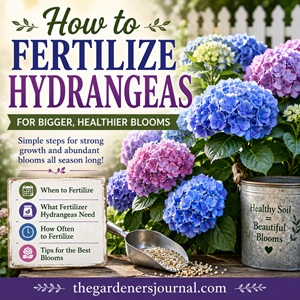
Hydrangeas are one of my favorite cottage garden flowers, and when they’re growing well, they can put on an incredible show.
This post may contain affiliate links.
They don’t necessarily need a lot of fertilizer, but giving them the right nutrients at the right time can help encourage healthy growth and beautiful blooms.
The trick is not to overfeed them. Too much fertilizer can give you a huge, leafy plant with fewer flowers.
When Should You Fertilize Hydrangeas?
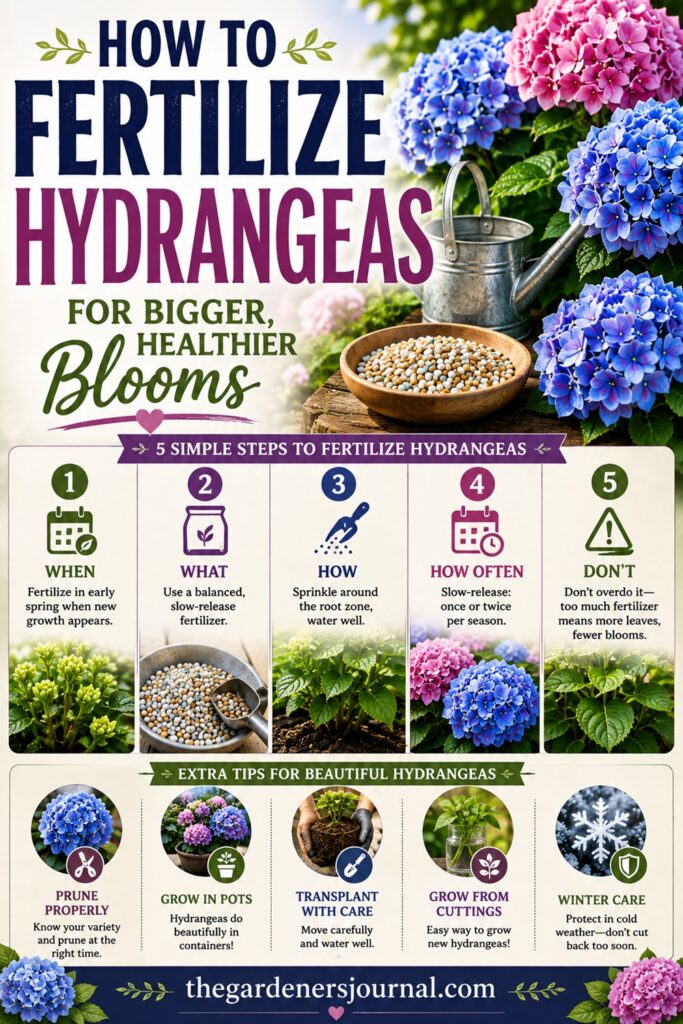
The best time to fertilize hydrangeas is in early spring, when new growth begins to appear.
This gives the plant nutrients as it comes out of winter and starts producing new stems and leaves.
For established hydrangeas, you may want to give them another light feeding later in the growing season, depending on the variety and the fertilizer you’re using.
Avoid fertilizing late in the summer or fall. Encouraging tender new growth too close to winter can leave the plant more vulnerable to cold damage.
What Kind of Fertilizer Do Hydrangeas Need?
A balanced, slow-release fertilizer is usually a good choice for hydrangeas.
You don’t need to use a high-nitrogen fertilizer just because you want your plant to grow quickly. Too much nitrogen can encourage lots of green foliage while reducing flowering.
Organic matter such as compost can also be helpful for improving the soil around your hydrangeas.
If you’re growing blue hydrangeas, keep in mind that flower color is influenced by soil chemistry, particularly the availability of aluminum. Fertilizer itself isn’t what turns a hydrangea blue.
For more information, see How to Make Hydrangeas Blue: The Cottage Garden Secret You Need to Know.
How to Fertilize Hydrangeas
Before applying fertilizer, make sure the soil isn’t completely dry.
For granular fertilizer, sprinkle it around the root zone of the plant, keeping it away from the stems. Follow the product directions for the amount to use rather than applying extra fertilizer.
Gently work it into the surface of the soil if recommended by the product instructions, then water thoroughly.
If you’re using a liquid fertilizer, follow the label directions carefully.
Don’t Fertilize the Foliage
Fertilizer is intended for the soil and roots, not for piling onto the leaves or flowers.
Applying concentrated fertilizer directly to foliage can cause damage, so take care when feeding your plants.
How Often Should You Fertilize Hydrangeas?
The answer depends on the fertilizer you’re using.
A slow-release fertilizer may only need to be applied once or twice during the growing season, while other fertilizers may require more frequent applications.
Always follow the instructions for the fertilizer you’re using.
More fertilizer doesn’t mean more flowers.
If your hydrangea is growing well and producing healthy blooms, there’s usually no reason to increase the amount you’re feeding it.
What If Your Hydrangea Isn’t Blooming?
If your hydrangea isn’t producing flowers, fertilizer isn’t necessarily the solution.
Pruning at the wrong time is one of the biggest reasons hydrangeas fail to bloom. Some varieties flower on old wood while others bloom on new wood, so knowing which type you have is important.
If you’re not sure when to prune, take a look at The Right Way to Prune Hydrangeas.
You may also want to read The Secret to Gorgeous Hydrangeas Starts with Proper Pruning for more information about getting your plants to bloom.
Add Compost to Your Hydrangea Garden
Hydrangeas appreciate soil that’s rich in organic matter.
Adding a thin layer of compost around established plants can help improve soil structure and provide a gentle source of nutrients.
Just avoid piling compost or mulch directly against the stems of the plant.
Healthy soil, consistent moisture, and the right amount of sunlight will do more for your hydrangeas than heavy applications of fertilizer.
A Few More Hydrangea Growing Tips
Fertilizing is just one part of keeping hydrangeas healthy.
If you’re adding hydrangeas to your garden, The Best Guide to Growing Hydrangeas in Pots can help if you want to grow them in containers.
Need to move an established plant? Read How to Transplant Hydrangeas Without Killing Them before digging it up.
You can also grow new hydrangea plants from existing ones with How to Grow Hydrangeas from Cuttings.
And as the growing season winds down, knowing what to do with your plants is important.
See Winter Care for Hydrangeas: Should You Cut Them Back? and Will Hydrangeas Grow Back If Cut Down? Here’s What You Need to Know for tips on preparing them for the next season.
The Key to Fertilizing Hydrangeas
Hydrangeas don’t need to be pampered with fertilizer all season long.
Give them good soil, adequate moisture, the right amount of sunlight, and moderate feeding during active growth, and they can reward you with beautiful flowers year after year.
And if your hydrangea isn’t blooming, don’t automatically reach for more fertilizer. Sometimes the best thing you can do is figure out what kind of hydrangea you have and make sure you’re pruning it at the right time.
Follow my cottage garden flowers board on Pinterest.