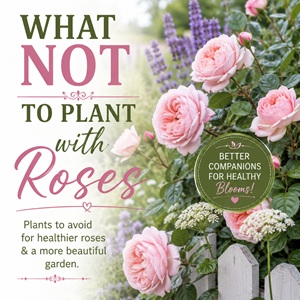
Roses are one of the most beloved flowers in the garden, but choosing the wrong neighboring plants can lead to poor air circulation, increased disease, competition for nutrients, and disappointing blooms.
This post may contain affiliate links.
While roses pair beautifully with many perennials and herbs, there are a few plants that are better kept at a distance.
Here’s what not to plant with roses—and what to grow instead for a healthier, more beautiful garden.
Why Companion Planting Matters for Roses
Companion planting helps roses by:
- Improving air circulation
- Reducing pest problems
- Attracting pollinators
- Conserving soil moisture
- Creating a beautiful cottage garden display
However, the wrong companions can create problems by competing for water, nutrients, and sunlight or by encouraging diseases.
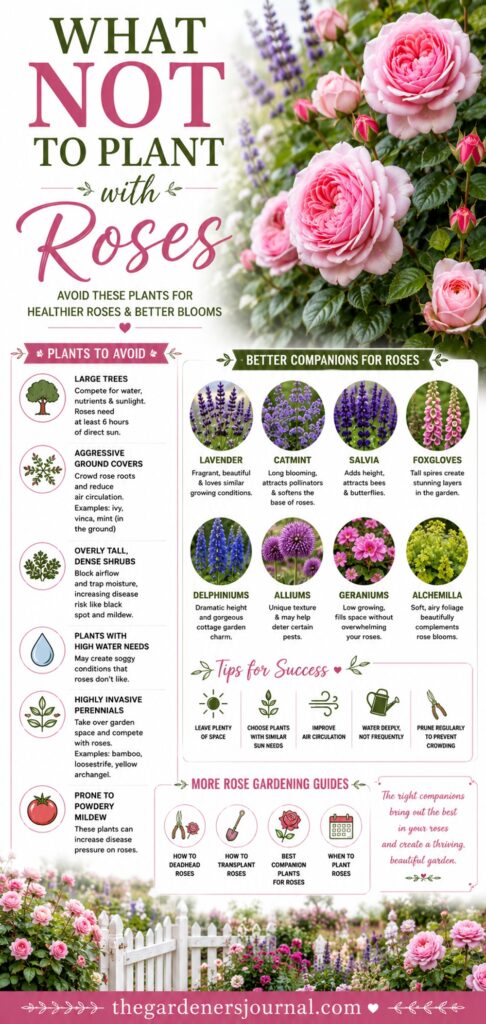
1. Large Trees
Large shade trees are one of the worst companions for roses.
Trees compete heavily for:
- Water
- Nutrients
- Sunlight
Most roses need at least six hours of direct sun each day. Planting them beneath maples, oaks, or other mature trees often results in fewer blooms and weaker plants.
2. Aggressive Ground Covers
Fast-spreading ground covers may look attractive, but they often crowd rose roots.
Avoid aggressive spreaders such as:
- English ivy
- Bishop’s weed
- Vinca
- Mint planted directly in the ground
Instead, choose slower-growing companions that leave room for air circulation.
3. Overly Tall, Dense Shrubs
Large shrubs planted too close to roses block airflow.
Poor air circulation increases the risk of:
- Black spot
- Powdery mildew
- Rust
Always leave enough space around each rose to allow sunlight and fresh air to reach the foliage.
4. Plants with High Water Needs
Some garden plants require consistently wet soil, while roses prefer evenly moist—but well-drained—soil.
Plants that demand constantly soggy conditions may create an environment where rose roots struggle.
5. Highly Invasive Perennials
Avoid planting invasive perennials next to roses, including:
- Running bamboo
- Some aggressive ornamental grasses
- Gooseneck loosestrife
- Yellow archangel
These plants quickly overwhelm neighboring roses.
6. Plants That Easily Develop Powdery Mildew
Some ornamentals are especially prone to fungal diseases.
When planted close together, disease pressure can increase throughout the garden.
Good spacing is one of the simplest ways to keep roses healthy.
7. Sun-Loving Vegetables That Need Frequent Harvesting
Vegetable gardens often require constant digging, watering, and fertilizing.
Keeping vegetables and roses in separate beds usually makes maintenance much easier.
Plants That Make Excellent Rose Companions
Instead of problem plants, consider these beautiful companions:
Lavender
Lavender enjoys similar growing conditions and creates a classic cottage garden look.
Catmint
Its long blooming season softens the base of roses while attracting pollinators.
Salvia
Salvia adds vertical interest and attracts bees and butterflies.
Foxgloves
Tall flower spikes create beautiful cottage garden layers behind roses.
Delphiniums
Their dramatic height pairs perfectly with shrub and climbing roses.
Alliums
Alliums may help deter certain pests while adding architectural interest.
Geraniums (Hardy Geraniums)
These low-growing perennials provide attractive ground cover without overwhelming roses.
Tips for Successful Rose Companion Planting
For the healthiest roses:
- Leave plenty of space between plants.
- Choose companions with similar sunlight needs.
- Avoid overly aggressive spreaders.
- Water deeply rather than frequently.
- Prune nearby plants to improve airflow.
Healthy spacing is often more important than the specific companion plant you choose.
Frequently Asked Questions
Can roses grow near hydrangeas?
Yes, if both receive enough sunlight and have adequate spacing. Keep in mind that hydrangeas generally prefer more moisture than roses.
Can I plant mint next to roses?
It’s best to grow mint in containers. Mint spreads aggressively and can quickly take over a flower bed.
Are hostas good companions?
Hostas work well with roses only where both receive suitable light. In hot climates, their growing conditions often differ.
Should roses be planted alone?
Not at all. Roses are beautiful in mixed borders with compatible perennials, herbs, and flowering plants that improve biodiversity and create a classic cottage garden design.
More Rose Gardening Guides
Learn more about growing beautiful, healthy roses:
More Companion Planting Guides
If you’re planning a thriving cottage garden, you’ll also enjoy:
- Best Companion Plants for Peonies
- Best Companion Plants for Lilacs
- Best Companion Plants for Clematis
- Best Companion Plants for Blueberries
- Best Companion Plants for Raspberries
The secret to growing healthy roses isn’t just choosing beautiful companion plants—it’s also knowing which plants to avoid.
By giving roses plenty of sunlight, good air circulation, and neighbors with similar growing requirements, you’ll enjoy healthier foliage, stronger plants, and spectacular blooms all season long.
With thoughtful companion planting, your roses can become the centerpiece of a colorful, thriving cottage garden.
Follow my companion planting gardening for beginners board on Pinterest.