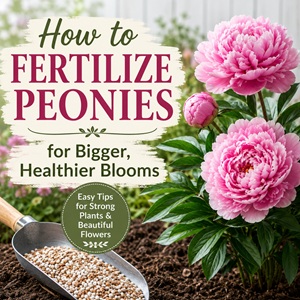
Peonies aren’t particularly difficult to grow, but a little extra nutrition can make a big difference when you want healthy plants and plenty of beautiful blooms.
This post may contain affiliate links.
The good news is that peonies don’t need to be heavily fertilized. In fact, too much fertilizer can encourage lots of foliage without giving you more flowers.
A light application at the right time is usually all they need.
When Should You Fertilize Peonies?
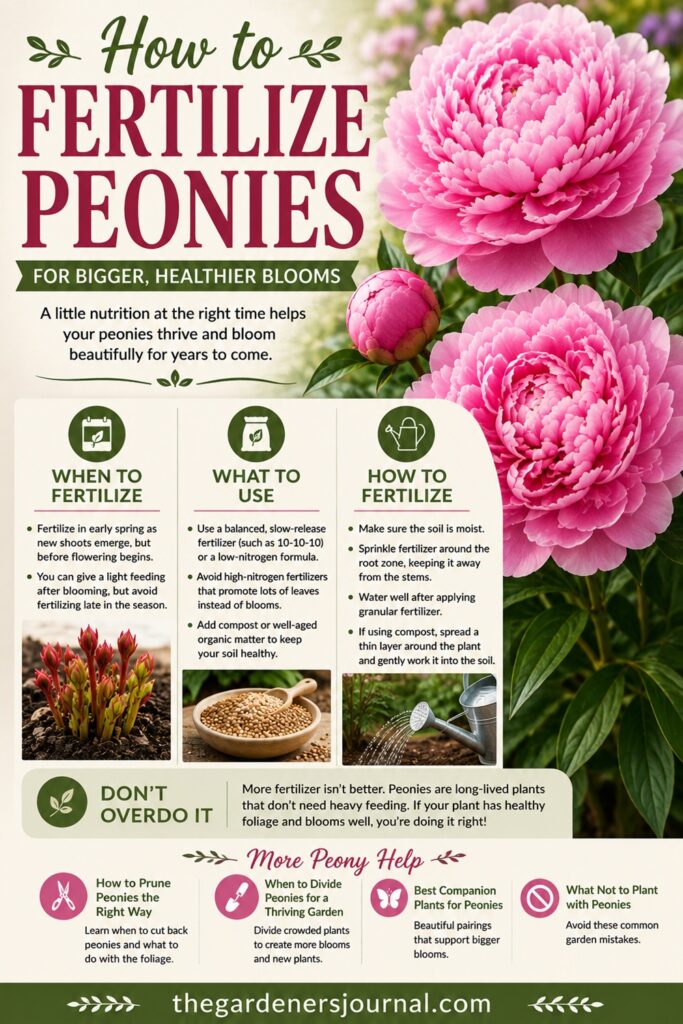
The best time to fertilize peonies is in early spring, when the new shoots are beginning to emerge from the ground but before the plant has started flowering.
This gives the plant nutrients as it puts on new growth and prepares for the coming bloom season.
You can also give established plants a light feeding after they finish blooming if they need it, but avoid applying large amounts of fertilizer late in the season.
What Kind of Fertilizer Do Peonies Need?
Peonies generally do well with a balanced, slow-release fertilizer or a fertilizer that isn’t particularly high in nitrogen.
A fertilizer that’s too high in nitrogen can encourage lush green foliage at the expense of flowers.
You can also improve the soil around your peonies by adding a layer of compost or well-aged organic matter.
I like the idea of thinking of this less as feeding the flowers and more as keeping the soil healthy so the plant has what it needs.
How to Fertilize Peonies
Start by making sure the soil around the plant is reasonably moist.
Apply the fertilizer according to the package directions, keeping it away from the stems of the plant. Sprinkle it around the root zone rather than directly against the crown.
Water well after applying granular fertilizer.
If you’re using compost, spread a thin layer around the plant and gently work it into the surface of the soil. Be careful not to bury the crown of the peony.
Don’t Overdo It
More fertilizer isn’t necessarily better.
Peonies can live and bloom for decades, and established plants generally don’t need to be constantly fed. If your plants have healthy foliage and are blooming well, there’s no reason to keep adding fertilizer.
If a peony isn’t blooming, fertilizer may not be the answer either. Lack of sunlight, planting too deeply, immature plants, overcrowding, and other growing conditions can all affect flowering.
If you’re dealing with a peony that isn’t blooming, take a look at Peonies Not Blooming? Easy Fixes for More Flowers before reaching for more fertilizer.
Other Peony Growing Tips
Fertilizing is just one small part of keeping peonies healthy.
If you’re growing peonies in your garden, you may also want to read:
- How to Prune Peonies the Right Way — Learn when to cut back peonies and what to do with the foliage after flowering.
- When to Divide Peonies for a Thriving Cottage Garden — If your established peonies have become crowded, dividing them can give you new plants for other areas of the garden.
- How to Transplant Peonies Without Damaging Them — Moving a peony takes a little care, especially if you want it to settle into its new location.
- Best Companion Plants for Peonies – Beautiful Pairings for Bigger Blooms — Find flowers and plants that look beautiful growing alongside peonies.
- What Not to Plant with Peonies (Avoid These Common Garden Mistakes) — Not every plant makes a good neighbor for peonies.
- Growing Peonies in Pots for a Cottage Garden Look — Yes, you can grow peonies in containers with the right conditions.
Peonies are one of those plants that reward patience. Once they’re established in a sunny spot with good soil and enough room to grow, they can come back year after year with very little fuss.
A little compost, an occasional light feeding, and good basic care may be all your peonies need to keep putting on a beautiful show every spring.
Follow my cottage garden flowers board on Pinterest.