Parsley is one of those herbs I think every kitchen garden should have. It’s easy to grow, doesn’t need a lot of space, and once you have fresh parsley growing outside your kitchen door, you’ll find all kinds of ways to use it.
This post may contain affiliate links.
Whether you grow curly parsley or flat-leaf Italian parsley, it’s a useful herb for everything from soups and sauces to salads, roasted vegetables, and homemade herb blends.
It’s also a great choice for containers if you don’t have room for a traditional herb garden.
Choosing a Place to Grow Parsley
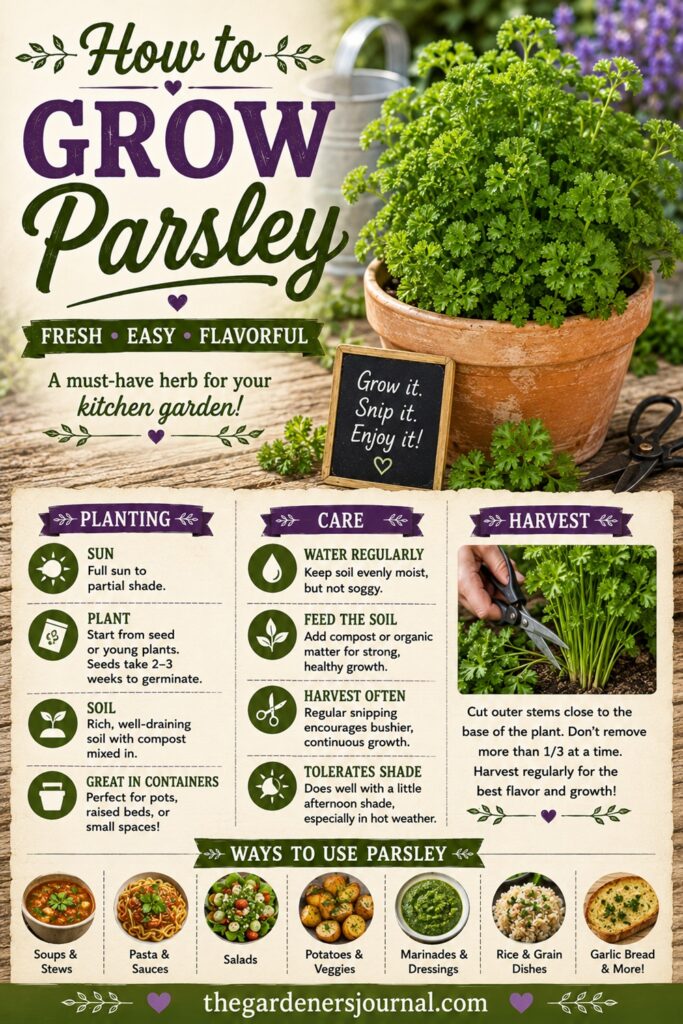
Parsley does well in full sun to partial shade. In warmer climates, giving it some afternoon shade can help keep it from drying out or struggling in the heat.
Choose a spot with rich, well-draining soil. If you’re planting in the garden, work some compost into the soil before planting.
Parsley also grows very well in containers, making it an easy addition to a patio, balcony, or small kitchen garden.
How to Plant Parsley
Parsley can be grown from seed or purchased as young plants.
If you’re starting from seed, be patient. Parsley seeds can take a couple of weeks to germinate, so don’t assume they’ve failed if nothing happens right away.
Keep the soil consistently moist while the seeds are germinating. Once the seedlings are established, thin them if necessary so they have enough room to grow.
If you’re planting nursery-grown parsley, simply transplant it into prepared soil or a container and water it well.
How to Care for Parsley
Parsley is fairly easygoing once it gets established.
Water regularly. Keep the soil evenly moist, especially during hot or dry weather. Avoid keeping the soil soggy.
Give it good soil. Parsley appreciates fertile soil with plenty of organic matter. A little compost added to the garden each season can help keep plants productive.
Harvest regularly. Picking parsley regularly encourages the plant to keep producing fresh growth.
Don’t worry about a little shade. Parsley doesn’t require all-day blazing sun to grow well, which makes it especially useful in smaller gardens where every sunny spot is valuable.
How to Harvest Parsley
When the plant is well established, you can begin harvesting the outer stems as needed.
Cut the stems close to the base of the plant rather than simply picking individual leaves from the tops. This encourages the plant to produce more new growth from the center.
Try not to remove too much of the plant at one time. Regular, light harvesting is the best way to keep your parsley producing.
How to Use Fresh Parsley
Fresh parsley is one of those herbs that can make a simple meal feel much more finished.
Use it in:
- Soups and stews
- Pasta dishes
- Salads
- Potato dishes
- Homemade sauces
- Marinades
- Roasted vegetables
- Garlic butter
- Homemade herb salts
- Grain and rice dishes
I especially like adding a handful of freshly chopped parsley right before serving. It adds fresh flavor and a little color without overpowering the rest of the dish.
Growing Parsley in a Kitchen Garden
Parsley is a perfect herb for kitchen garden living because you can harvest exactly what you need when you’re cooking.
A few plants tucked into a garden bed or a couple of containers near the kitchen can provide fresh herbs for much of the growing season.
And once you start growing your own parsley, you may find yourself wanting to add even more useful herbs to the garden—basil, chives, rosemary, thyme, and dill are all wonderful companions for a home herb garden.
A small herb garden doesn’t have to be complicated. Start with the herbs you actually use, harvest them regularly, and enjoy having fresh flavor right outside your door.
More Herb Growing Ideas
- How to Grow Basil for Your Kitchen Garden
- How to Prune Rosemary for Better Growth
- How to Grow Chives Easily in Your Home Garden
Follow my herb garden board on Pinterest.