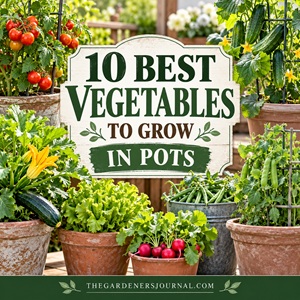
You don’t need a big backyard to grow a vegetable garden.
This post may contain affiliate links.
A few good-sized containers on a patio, porch, balcony, or sunny corner of the yard can give you a surprisingly productive little garden.
In fact, growing vegetables in pots can make gardening easier in some ways because you have more control over the soil, watering, and growing conditions.
The key is choosing vegetables that are happy to grow in containers—and choosing a pot that’s large enough for the plant you’re growing.
I’ve already written guides for growing zucchini, peas, cucumbers, and tomatoes in containers, so I’ve included those below along with six more vegetables that are especially well suited to growing in pots.
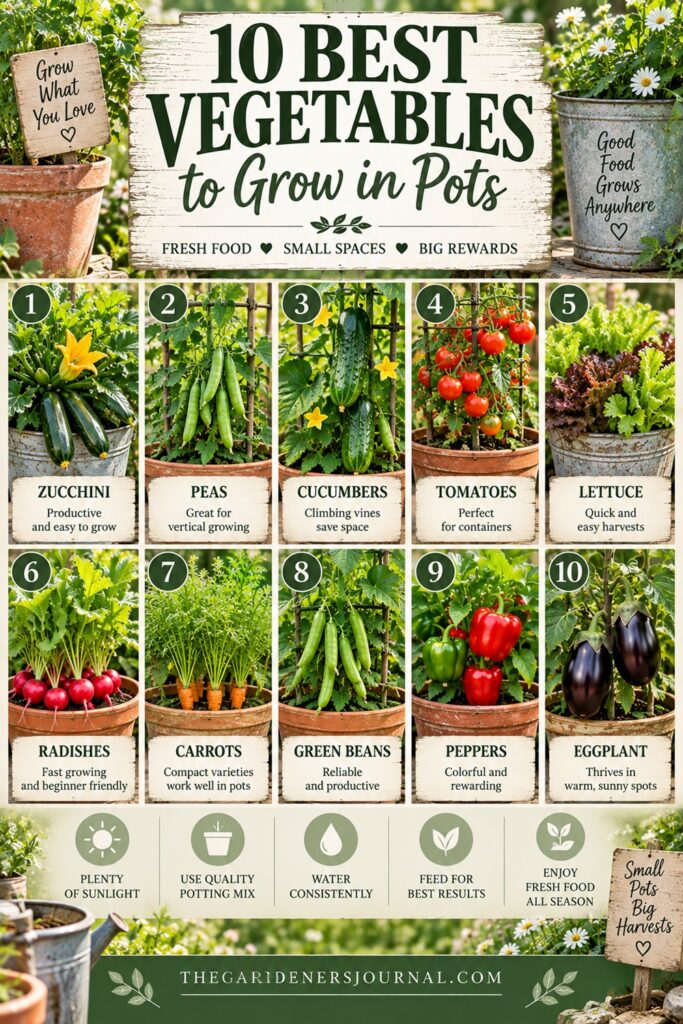
1. Zucchini
Yes, you really can grow zucchini in a pot.
Zucchini plants take up quite a bit of room, so you’ll want a large container and plenty of sunlight. Look for compact or bush varieties if you’re short on space.
A container that’s at least 5 gallons is a good starting point, although bigger is even better for zucchini.
Already growing zucchini? See my guide on How to Grow Zucchini in Containers for more detailed planting and care tips.
Zucchini is one of those vegetables that can produce a lot from just one plant, making it a great choice when garden space is limited.
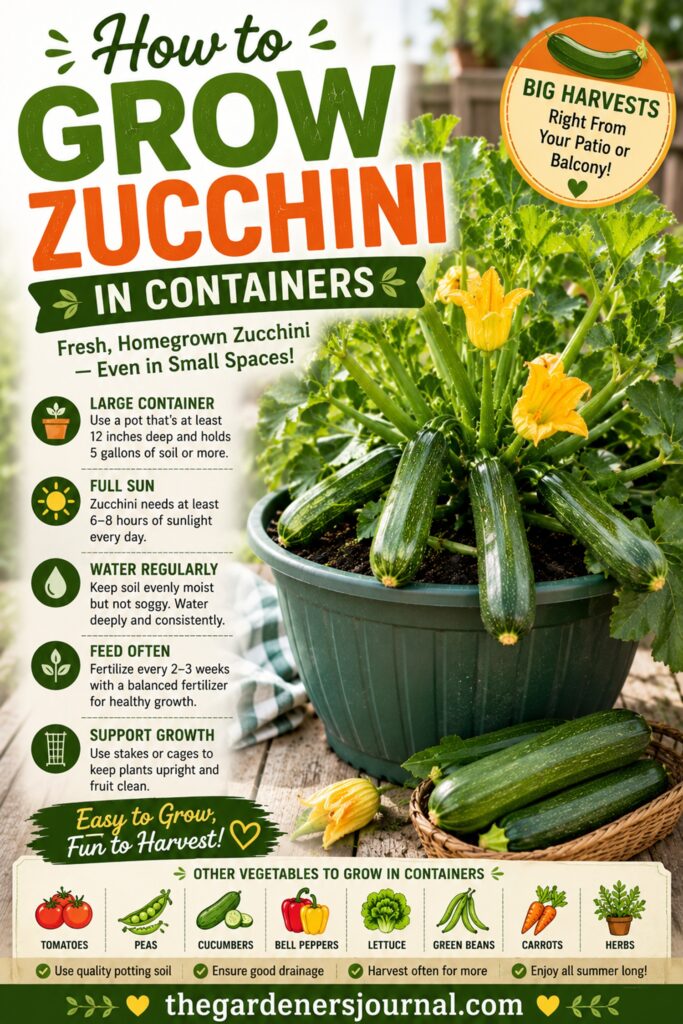
2. Peas
Peas are another excellent container vegetable, especially if you have somewhere to provide a little support.
You can grow peas in pots in early spring or fall, depending on your climate. Choose a container that’s deep enough for the roots and add a small trellis or other support for climbing varieties.
Peas are also a great vegetable for vertical gardening because the vines can grow upward rather than spreading all over your patio.
I’ve got a complete guide to How to Grow Peas in Containers if you want to give them a try.
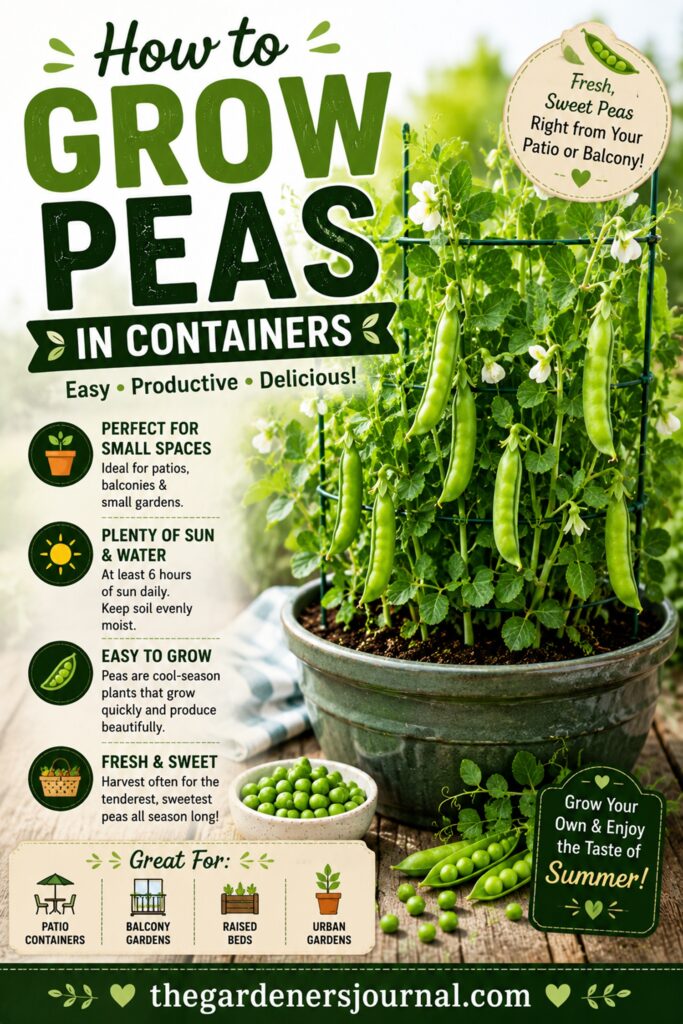
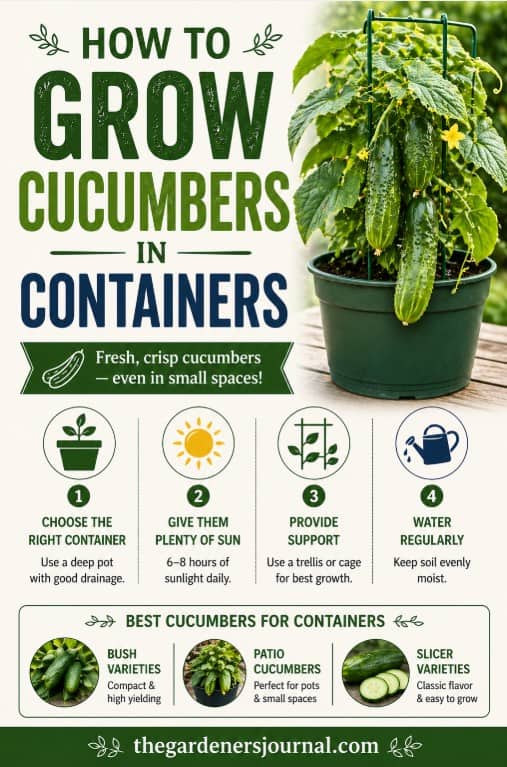
3. Cucumbers
Cucumbers can be surprisingly productive in containers.
Choose a compact or container-friendly variety and give the vines something to climb. A trellis not only saves space but also keeps the cucumbers off the ground and makes harvesting easier.
Use a large pot with good drainage and place it somewhere that receives plenty of sunlight.
If you’re interested in growing your own, my guide to How to Grow Cucumbers in Containers walks you through the basics.
4. Tomatoes
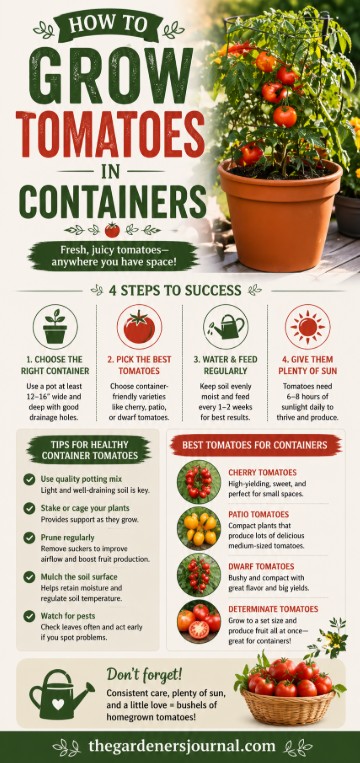
Tomatoes are probably one of the most popular vegetables to grow in containers—and for good reason.
They do very well in pots as long as you choose the right variety and give them enough room for their roots.
Determinate or patio varieties are particularly convenient for containers, although larger tomatoes can also be grown in big pots with sturdy support.
Tomatoes need plenty of sunlight and consistent watering, especially once they start producing fruit.
If you want to grow tomatoes in pots, take a look at How to Grow Tomatoes in Containers for more detailed tips.
5. Lettuce
Lettuce is one of the easiest vegetables to grow in a container.
It doesn’t need a particularly deep pot, which makes it a great choice for shallow planters, window boxes, and smaller containers.
You can sow seeds directly in the pot and harvest the outer leaves as the plants grow. This gives you fresh lettuce over a longer period instead of harvesting the entire plant at once.
Lettuce also grows quickly, so it’s a satisfying vegetable for beginning gardeners.
6. Radishes
If you want a vegetable that gives you results quickly, try growing radishes.
Radishes have relatively shallow roots and don’t require a huge container. They’re also easy to grow from seed, making them a great choice for children or beginning gardeners.
Sow the seeds directly into the pot, keep the soil evenly moist, and thin the seedlings as they grow.
Because radishes mature quickly, you can often plant several rounds throughout the growing season.
7. Carrots
Carrots are another vegetable that can be grown surprisingly well in containers.
The trick is choosing a pot that’s deep enough for the variety you’re growing. Shorter varieties such as round or baby carrots are especially convenient for containers.
Use loose, stone-free potting mix so the roots have room to develop without hitting obstacles.
One advantage of growing carrots in pots is that you can control the growing medium. There’s no need to wrestle with rocky or heavy garden soil.
8. Green Beans
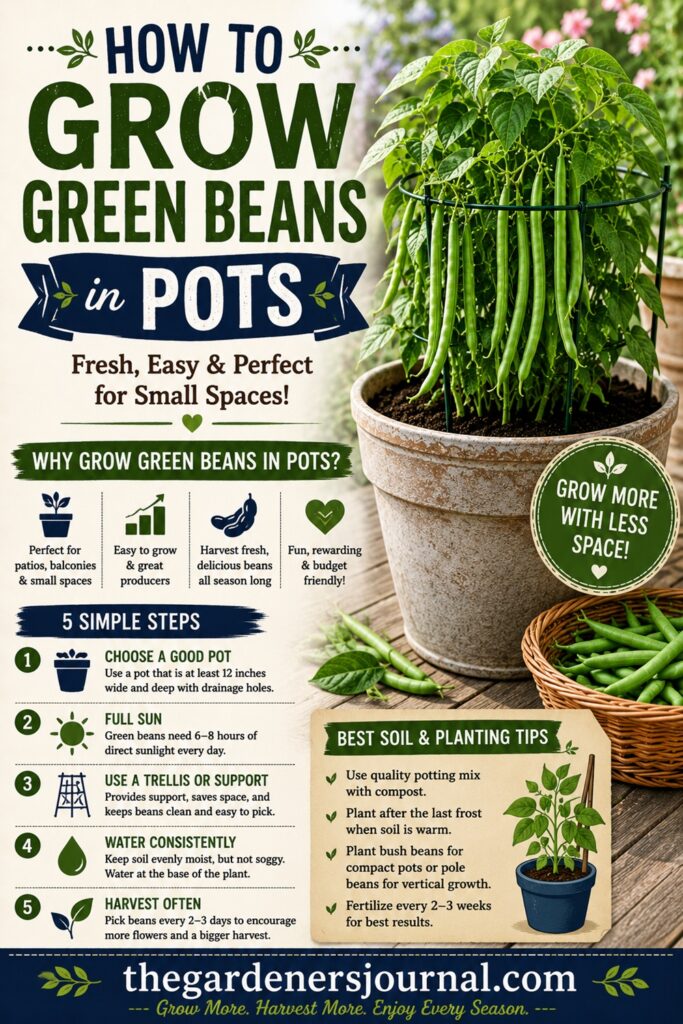
Bush beans are an excellent choice for container gardens.
They’re compact, productive, and don’t require a huge amount of space. A sunny patio can provide everything they need.
Pole beans can also be grown in containers, but you’ll need a sturdy trellis or support system for the vines.
Bush beans are generally the simpler choice if you’re working with limited space.
Harvest the beans regularly once they begin producing. Frequent harvesting encourages the plants to keep producing.
If you want to grow green beans in pots, take a look at How to Grow Green Beans in Containers for more detailed tips.
9. Peppers
Peppers are particularly well suited to container gardening.
Both sweet peppers and hot peppers can grow happily in pots as long as they have adequate sunlight, warmth, and consistent moisture.
A container that’s at least 5 gallons works well for many pepper plants, although the exact size depends on the variety.
Keep your pepper plants somewhere warm and sunny, and avoid letting the soil dry out completely while the plants are flowering and producing fruit.
There’s something especially satisfying about stepping outside and picking a fresh pepper right from a pot.
10. Eggplant
Eggplant might not be the first vegetable you think of for container gardening, but it can be a great choice.
Look for compact varieties that are better suited to pots. Eggplants like warm weather and plenty of sun, so choose your sunniest location.
Use a sturdy container because a healthy plant can become surprisingly heavy once it’s covered with leaves and fruit.
Regular harvesting also encourages the plant to continue producing.
Tips for Growing Vegetables in Pots
Once you start growing vegetables in containers, there are a few things that make a big difference.
Choose the Right Container
Don’t try to squeeze a large vegetable plant into a tiny pot.
The larger the mature plant, the more root space it will need. Bigger containers also tend to hold moisture longer, which can be helpful during hot weather.
Always make sure your containers have drainage holes.
Use Potting Mix
For container vegetables, use a quality potting mix rather than filling pots with heavy garden soil.
Container plants need a growing medium that provides good drainage while still holding enough moisture for healthy growth.
Give Them Plenty of Sun
Most fruiting vegetables—including tomatoes, peppers, cucumbers, zucchini, and eggplant—need plenty of sunlight to produce well.
Before you set up your containers, watch your yard or patio for a day and see where you get the most sun.
Don’t Forget to Water
Potted vegetables generally dry out faster than vegetables planted in the ground.
Check your containers regularly, particularly during hot or windy weather.
The goal is to keep the soil consistently moist without leaving the roots sitting in water.
Feed Your Plants
Nutrients in a container are limited compared with those available in a garden bed.
Vegetables may benefit from regular feeding during the growing season. Follow the directions for whatever vegetable fertilizer you choose rather than assuming more fertilizer is better.
Try Vertical Gardening
If you’re short on space, grow upward whenever you can.
Cucumbers and peas are obvious choices, but other vining vegetables can also be trained onto trellises and supports.
Vertical growing can turn a small patio into a surprisingly productive vegetable garden.
Why Grow Vegetables in Pots?
Container gardening isn’t just for people who don’t have a yard.
Growing vegetables in pots gives you the flexibility to move plants around, control the growing medium, and keep your garden close to the kitchen.
It’s also a great way to experiment.
You don’t need to plant twenty different vegetables to have a productive garden. Start with a few of your favorites and see what grows well in your particular space.
And if you’re already growing zucchini, peas, cucumbers, or tomatoes, you have four excellent candidates to get your container garden started.
A few pots, some sunshine, and a little patience can give you a surprisingly productive vegetable garden—even when you don’t have room for a traditional garden bed.
Follow my container gardening for beginners board on Pinterest.