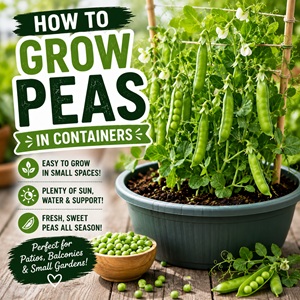
If you want an easy vegetable to grow in a small space, peas are one of the best choices for container gardening.
This post may contain affiliate links.
Growing peas in containers is simple, beginner-friendly, and a great way to enjoy fresh homegrown peas even if you only have a patio, balcony, deck, or small backyard space.
Peas grow quickly, don’t require a huge container, and produce sweet, delicious pods perfect for salads, stir fry recipes, soups, and fresh snacking right from the vine.
Whether you want to grow sugar snap peas, snow peas, or shelling peas, container gardening makes it easy to enjoy a productive harvest without needing a traditional garden.
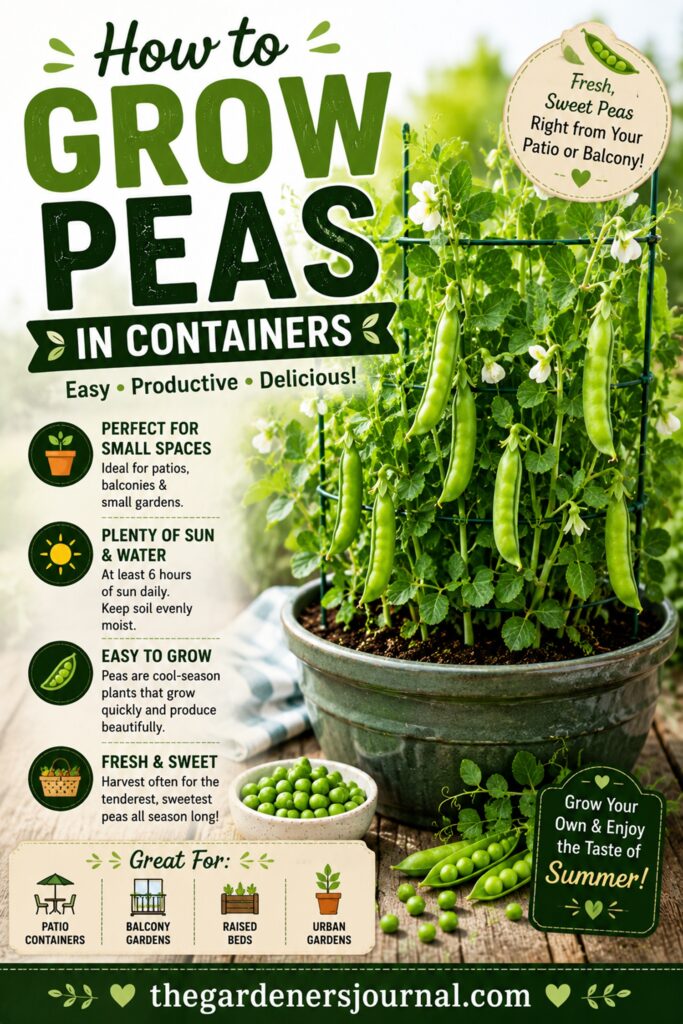
One of the best things about growing peas in pots is how versatile they are.
You can place containers on patios, porches, balconies, raised beds, or sunny corners of your yard to create a beautiful and productive small-space garden.
If you’re new to vegetable gardening, peas are an excellent crop to start with because they’re low maintenance and grow well in cool weather.
Why Grow Peas in Containers?
Growing peas in containers has several benefits for small-space gardeners.
- Perfect for patios and balconies
- Great for beginner gardeners
- Easy to care for
- Produces a fast harvest
- Helps maximize small garden spaces
- Easy to move if temperatures change
Container gardening also allows you to control the soil quality and drainage more easily, helping pea plants stay healthy and productive.
Choosing the Best Pea Varieties for Containers
Some pea varieties grow especially well in containers and small gardens.
Great Pea Varieties for Pots
- Sugar snap peas
- Snow peas
- Little Marvel peas
- Tom Thumb peas
- Dwarf shelling peas
Climbing peas grow beautifully with a small trellis or support, while compact bush varieties work well in smaller containers.
Best Containers for Growing Peas
Peas do not need extremely deep containers, but they do need enough room for healthy root growth.
Choose containers that are:
- At least 12 inches deep
- Wide enough for several plants
- Equipped with drainage holes
Plastic, ceramic, wood, and fabric grow bags all work well for growing peas.
Always use containers with proper drainage to prevent soggy soil and root rot.
Best Soil for Container Peas
Peas grow best in rich, loose, well-draining potting soil.
Avoid using heavy garden soil in containers because it can compact easily and prevent proper drainage.
For healthy pea plants:
- Use high-quality potting mix
- Add compost for nutrients
- Mix in perlite if needed for drainage
Peas prefer slightly moist soil but do not like sitting in water.
How to Plant Peas in Containers
Plant pea seeds directly into the container since peas do not transplant well.
Planting Tips
- Fill the container with potting soil.
- Plant seeds 1 to 1½ inches deep.
- Space seeds about 2 inches apart.
- Water gently after planting.
- Place the container in a sunny location.
Peas germinate quickly in cool weather and usually sprout within 7–14 days.
Sunlight and Water Requirements
Peas grow best with at least 6–8 hours of sunlight daily.
Morning sun is especially helpful in warmer climates because peas prefer cooler temperatures.
Keep the soil evenly moist but not soaked. Container plants dry out faster than garden beds, so check moisture regularly during warm weather.
Supporting Pea Plants
Most pea varieties benefit from support as they grow.
You can use:
- small trellises
- tomato cages
- bamboo stakes
- string supports
Adding support early prevents damage to the roots later on.
Supporting pea vines also improves airflow and makes harvesting easier.
Common Pea Plant Problems
Peas are generally easy to grow, but there are a few common issues to watch for.
Common Problems
- aphids
- powdery mildew
- root rot
- heat stress
Good airflow, proper watering, and healthy soil help prevent most problems.
Avoid overcrowding containers and water near the base of the plants instead of soaking the leaves.
Harvesting Peas
Peas are ready to harvest once the pods become plump and firm.
Harvest frequently to encourage more production throughout the season.
Sugar snap peas and snow peas taste best when picked young and tender.
Fresh peas are delicious in:
- salads
- stir fry recipes
- pasta dishes
- soups
- vegetable trays
More Container Gardening Ideas
- How to Grow Cucumbers in Containers
- How to Grow Zucchini in Containers
- Growing Greens in Containers
- How to Grow Tomatoes in Containers
Follow my container gardening board on Pinterest.