There’s something about the garden in early fall that makes me want to slow down a little.
This post may contain affiliate links.
The flowers may not be quite as abundant as they were in midsummer, but there is still plenty to do. And this is one of those times when a little garden cleanup can make a big difference next spring.
The tricky part is knowing what to cut back, what to leave alone, and what should wait until spring.
Not every perennial wants the same treatment.
Here’s what I like to do in my perennial garden in fall.
1. Start by Cleaning Up Diseased Plants
Before you start cutting everything back, take a good look at your plants.
Remove foliage that is clearly diseased, heavily damaged, or covered with fungal spots.
Don’t put diseased plant material in your compost pile unless you know your compost gets hot enough to destroy the pathogens.
Healthy leaves and stems are a different story. You don’t necessarily need to remove every bit of plant material just because it looks a little tired.
In fact, leaving some healthy plant material in place can be beneficial.
2. Don’t Cut Back Everything in Your Garden
This is probably the biggest mistake gardeners make during fall cleanup.
It’s tempting to cut every perennial down to the ground once the flowers are finished, but you don’t have to make your garden perfectly tidy for winter.
Some perennials provide food and shelter for birds and beneficial insects, and their dried seed heads can add beautiful winter interest to the garden.
Plants such as coneflowers, black-eyed Susans and other seed-producing flowers can often be left standing through winter.
I actually love the way a cottage garden looks when some of those dried flower heads are still standing after the first frost.
3. Know Which Perennials Should Be Cut Back
Some plants do benefit from being cut back in fall, particularly if their foliage becomes messy or diseased.
But timing matters.
Peonies are a good example. Once the foliage has died back naturally and turned brown, you can cut the stems back to the ground and remove the debris from around the plant.
Don’t rush to cut healthy green peony foliage down simply because summer is over. Let the plant finish its work for the season.
You can read more about the timing and common mistakes in Should You Cut Back Peonies? Here’s What to Know.
4. Take Care of Your Daylilies
Daylilies can look pretty rough by the end of the growing season.
Remove dead flower stalks and clean up foliage that has completely died back. Depending on your climate and the variety you’re growing, some foliage may remain green well into fall.
There’s no need to remove healthy foliage just because the calendar says it’s time for fall cleanup.
And if your daylilies have become overcrowded, fall can also be a good time to think about dividing them, depending on your growing zone and local conditions.
Read next: How to Divide Daylilies
5. Be Careful With Hydrangeas
Hydrangeas are another plant where fall pruning can cause problems.
Before you grab your pruners, make sure you know which type of hydrangea you have and whether it blooms on old wood or new wood.
A heavy pruning at the wrong time can mean removing next year’s flower buds.
This is one of those cases where doing nothing is often better than pruning just because the plant looks a little overgrown.
If your hydrangeas need pruning, make sure you understand their blooming habits first.
Read next: Will Hydrangeas Grow Back if Cut Down?
6. Pull Annuals, But Save the Seeds
Once your annual flowers have finished blooming, you can remove plants that are no longer producing.
But don’t be too quick to pull everything.
Fall is an excellent time to collect seeds from some of your favorite flowers so you can grow them again next year.
Zinnias, marigolds, sunflowers and cosmos are all good candidates for seed saving.
I especially like this approach in a cottage garden because you don’t necessarily have to buy everything again every spring. Let a few flowers go to seed, collect what you can, and see what comes back.
7. Divide Overgrown Perennials When Appropriate
Fall can be a good time to divide some established perennials, particularly when they’ve become crowded or aren’t blooming as well as they used to.
Look for plants that have outgrown their space, developed a bare center, or are noticeably overcrowded.
But don’t assume every perennial should be divided in fall.
The best timing depends on the plant, your climate, and when that particular plant blooms.
When you’re dividing a perennial, have the new planting location ready before you dig up the original plant. You don’t want its roots sitting around while you’re trying to figure out where everything is going.
8. Give Your Perennial Garden One Last Good Weeding
Fall is actually one of my favorite times to weed.
The garden is slowing down, the temperatures are more comfortable, and weeds are often much easier to spot once some of the summer growth has died back.
Pull weeds before they have a chance to drop more seeds.
You don’t have to make your garden absolutely spotless. The goal is simply to get ahead of the weeds before winter.
9. Add a Layer of Mulch
Once the soil has cooled down, you can add a layer of organic mulch around your perennials.
Mulch helps protect the soil, moderate temperature changes, and reduce moisture loss.
Just don’t pile mulch directly against plant crowns or woody stems.
A few inches around the plants is generally enough. You want to protect the roots without creating a damp environment right against the base of the plant.
10. Leave Some of Your Garden for the Birds
This is the part of fall gardening that I think we sometimes forget.
A perfectly cleaned-up garden isn’t necessarily the best garden for wildlife.
Seed heads can provide food for birds, while stems and leaf litter can provide shelter for beneficial insects.
So instead of asking, “How do I clean up my garden?”
I like to ask:
“What actually needs to be cleaned up?”
Those are two very different things.
You can remove diseased foliage, invasive weeds, and plants that genuinely need to be cut back while leaving some of the natural structure of the garden in place.
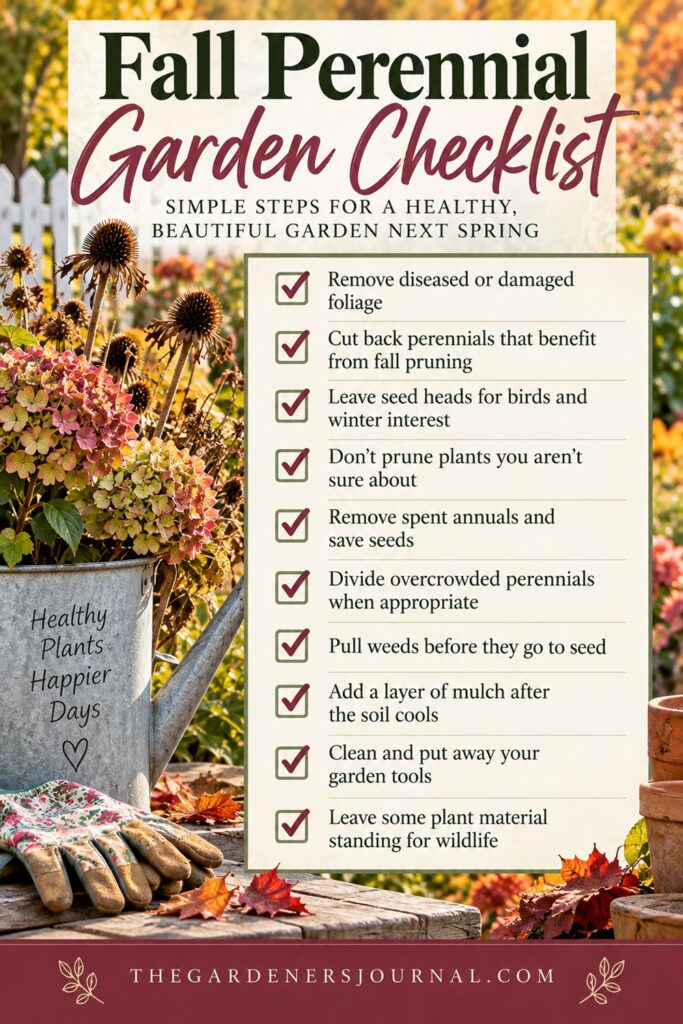
If you don’t want to overthink it, here’s a simple list to work through:
- Remove diseased or damaged foliage
- Cut back perennials that benefit from fall pruning
- Leave seed heads for birds and winter interest
- Don’t prune plants you aren’t sure about
- Remove spent annuals and save seeds
- Divide overcrowded perennials when appropriate
- Pull weeds before they go to seed
- Add a layer of mulch after the soil cools
- Clean and put away your garden tools
- Leave some plant material standing for wildlife
Don’t Feel Like You Have to Do It All
One of the things I love about a cottage garden is that it doesn’t have to look perfect.
Fall isn’t about stripping the garden down to bare soil and making everything neat and tidy.
It’s about helping your plants transition into winter while leaving enough behind to support the garden’s little ecosystem.
And honestly, sometimes the best thing you can do for your perennial garden in fall is leave it alone.
A little restraint now can mean a healthier, more interesting garden when spring arrives.
Follow my fall garden board on Pinterest.