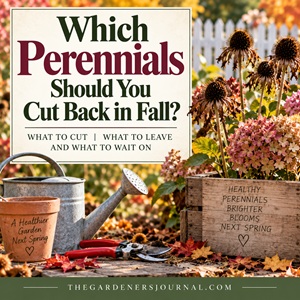
Fall is one of my favorite times in the garden. The flowers are winding down, the air is cooler, and there’s finally a little more time to look around and decide what actually needs to be done before winter.
This post may contain affiliate links.
But there’s one thing I try not to do during fall garden cleanup: cut everything back just because it looks finished.
Some perennials benefit from being cut back in fall. Others are better left standing through winter.
And some depend on your climate, the plant variety, and whether you want to provide food and shelter for wildlife.
So before you start cutting everything down, here’s a closer look at what to cut back, what to leave alone, and what can wait until spring.

Why You Shouldn’t Cut Back Every Perennial
A tidy garden isn’t necessarily a healthier garden.
Dead stems and seed heads can provide winter interest, shelter for beneficial insects, and food for birds. Some plants also look surprisingly beautiful covered with frost or a light dusting of snow.
Coneflowers are a good example. Their dried seed heads can provide food for birds, and leaving them standing can also allow them to naturally reseed.
If you’re growing coneflowers, you can learn more about them in Growing Coneflowers from Seed: A Beginner’s Guide.
So instead of asking, “What can I cut down?” I like to ask, “What actually needs to be cut back?”
Perennials You Can Cut Back in Fall
There are several reasons you might choose to cut a perennial back in fall.
You may want to remove diseased foliage, clean up plants that have completely died back, or simply keep certain plants from becoming a tangled mess over winter.
Peonies
Peonies are one of the easiest examples of a perennial that can be cut back once the foliage has naturally died back.
Don’t rush them while the leaves are still green. Allow the plant to finish its work for the season.
Once the foliage has turned brown and died back, you can cut the stems close to the ground and remove the debris from the garden.
If you’re unsure about the timing, read Should You Cut Back Peonies? Here’s What to Know.
Peonies are also one of those plants where fall care is worth getting right because you want them ready to come back strong next spring.
Bee Balm
Bee balm is another perennial that can be cleaned up at the end of the growing season.
During summer, deadheading keeps it blooming longer. But as fall approaches, you can stop removing the spent flowers if you’d like to leave the seed heads for birds and wildlife.
You can read more about caring for this cottage garden favorite in Deadhead Bee Balm to Keep Flowers Blooming All Summer.
Bee balm is also a wonderful plant to leave in a pollinator-friendly garden. It’s a favorite of bees, butterflies, and hummingbirds, and it pairs beautifully with other cottage garden flowers.
Perennials You May Want to Leave Standing
This is where fall garden cleanup gets interesting.
Some plants don’t need to be cut back at all in fall.
Coneflowers
As I mentioned above, coneflowers can be left standing through winter.
The dried seed heads add structure to the garden and provide seeds for birds. If you enjoy a more natural-looking cottage garden, they’re one of the plants I’d be inclined to leave alone.
You can also collect the seeds yourself if you’d like to grow more coneflowers next year.
Other Seed-Producing Flowers
The same idea applies to many other flowers that produce attractive seed heads.
Instead of removing every spent flower, consider leaving some of them standing until late winter or early spring.
This gives birds something to eat and provides places for insects to shelter during the colder months.
A garden doesn’t have to look perfectly cleaned up to be healthy.
What About Daylilies?
Daylilies can look pretty rough by the end of the growing season, especially after several hard frosts.
Remove flower stalks and foliage that has completely died back, but don’t feel like you have to remove healthy green foliage simply because fall has arrived.
If your daylilies have become overcrowded, fall can also be a good time to consider whether they need dividing, depending on your climate and the particular variety.
And if you’re working on a cottage garden with several different perennials, don’t forget that division doesn’t have to happen to every plant every year.
Read next: How to Divide Daylilies for More Blooms
Remove Diseased Foliage
This is one thing I don’t like to leave sitting around the garden over winter.
If a plant has foliage that is obviously diseased, remove it and dispose of it rather than leaving it around the base of the plant.
Healthy plant material is one thing. Diseased plant material is another.
Good garden cleanup is less about removing everything and more about removing the things that can cause problems later.
What About Roses?
Roses are a little different from herbaceous perennials, and fall isn’t necessarily the time for a major pruning.
Instead, focus on removing dead or diseased material and keeping an eye on the overall health of the plant.
If you’re still deadheading roses during the growing season, How to Deadhead Roses Without Damaging Your Plant has more information about making clean cuts and encouraging healthy growth.
Major pruning is something you want to time carefully rather than simply cutting a rose bush back because winter is approaching.
Don’t Forget About Wildlife
This is probably the biggest reason I don’t like an overly tidy fall garden.
A completely bare garden may look neat, but it doesn’t provide much for wildlife.
Leaving some dried stems and seed heads gives birds something to eat and creates little pockets of shelter for insects.
And if you’re growing a pollinator garden, leaving some plants standing can be especially helpful.
The Gardener’s Journal has more ideas for creating a garden that supports pollinators in Best Peonies and Flowers for a Pollinator Garden.
When Should You Wait Until Spring?
If you’re not sure whether a particular perennial should be cut back, waiting is often the better choice.
You can always cut a dead perennial back in spring.
You can’t undo a fall pruning once you’ve removed next year’s growth or flower buds.
This is especially important with plants whose flower buds develop on older stems. Before doing a major fall pruning, make sure you know how that particular plant blooms.
A Simple Fall Pruning Checklist
Before you start cutting, walk through your garden and ask:
- Is the foliage diseased?
- Has the plant naturally died back?
- Does this perennial benefit from fall pruning?
- Will leaving it standing provide food for birds?
- Does it have attractive winter structure?
- Am I removing healthy foliage too early?
- Would it be safer to wait until spring?
- Do I actually know what this plant needs?
If you can’t answer the last question, put the pruners down and look it up first.
The Goal Isn’t a Perfectly Tidy Garden
Fall garden cleanup doesn’t have to mean cutting everything to the ground.
I actually think there’s something beautiful about a garden that changes with the seasons. The dried flowers, seed heads, fading foliage, and empty stems are all part of that transition.
Cut back what needs to be cut back. Remove diseased material. Clean up the areas that genuinely need attention.
And then leave some of the garden standing.
Your winter garden might not look quite as tidy, but you’ll be providing a little more habitat for wildlife—and you’ll have less work to do when spring arrives.
And honestly, that’s a pretty good trade.
Follow my fall garden board on PInterest.