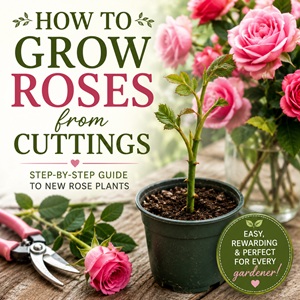
Growing roses from cuttings is one of the easiest and most rewarding ways to expand your garden.
This post may contain affiliate links.
Instead of purchasing new rose bushes, you can propagate healthy stems from an existing plant and grow beautiful new roses for free.
Whether you’re preserving a favorite heirloom rose or filling your cottage garden with more blooms, propagating roses from cuttings is a simple project that beginner gardeners can successfully do.
Why Grow Roses from Cuttings?
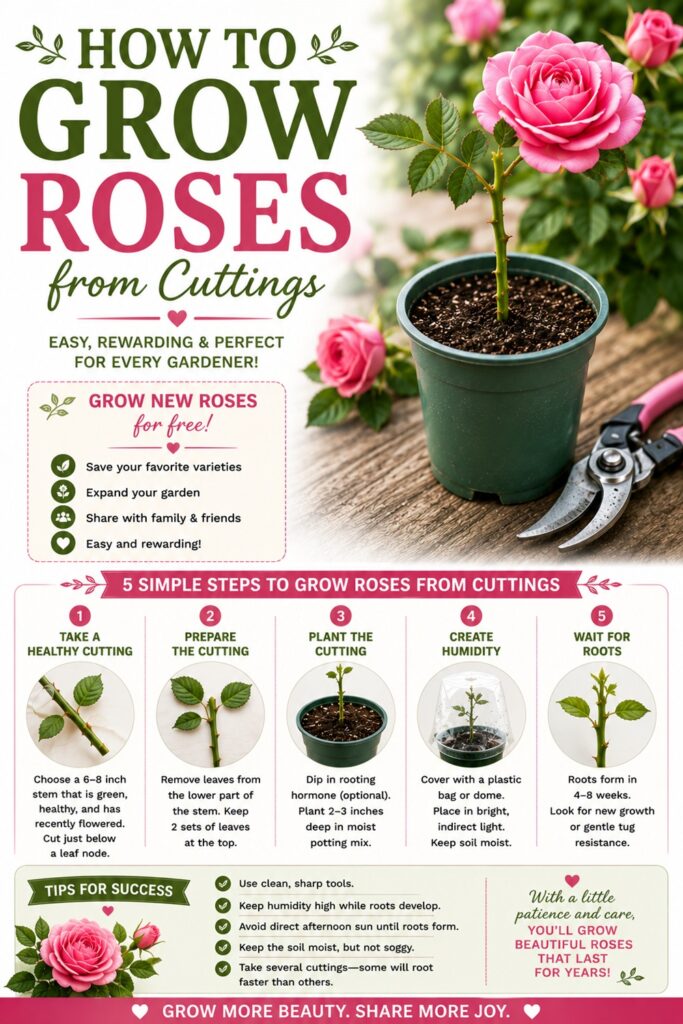
Propagating roses from cuttings allows you to:
- Grow new plants for free
- Preserve your favorite rose varieties
- Expand your cottage garden
- Share plants with family and friends
- Replace older rose bushes
Many shrub roses, climbing roses, and heirloom varieties root readily from cuttings.
The Best Time to Take Rose Cuttings
The ideal time is:
- Late spring
- Early summer
- Early fall in mild climates
Choose stems that have recently finished blooming but are still green and flexible.
Avoid old, woody stems or stems with active flower buds.
Supplies You’ll Need
- Healthy rose plant
- Clean pruning shears
- Small pots with drainage holes
- Quality potting mix
- Rooting hormone (optional)
- Plastic bag or humidity dome
- Watering can or spray bottle
Step 1: Choose a Healthy Stem
Select a healthy stem that is:
- 6–8 inches long
- About the thickness of a pencil
- Disease-free
- Recently flowered
- Green but beginning to mature
Cut just below a leaf node.
Step 2: Remove the Leaves
Remove all but the top two sets of leaves.
If flower buds are present, remove them as well.
This allows the cutting to focus its energy on producing roots instead of flowers.
Step 3: Dip in Rooting Hormone (Optional)
While roses often root without rooting hormone, using one may improve your success rate.
Dip the freshly cut end into rooting hormone before planting.
Step 4: Plant the Cutting
Fill a small pot with moist potting mix.
Insert the cutting about 2–3 inches deep, making sure at least one leaf node is below the soil surface.
Gently firm the soil around the stem.
Step 5: Create Humidity
Cover the pot loosely with:
- A clear plastic bag
- A plastic bottle with the bottom removed
- A humidity dome
This helps prevent moisture loss while roots develop.
Avoid allowing the plastic to touch the leaves.
Step 6: Keep the Soil Moist
Place the cutting in bright, indirect light.
Keep the soil consistently moist but never soggy.
Avoid direct afternoon sun until roots develop.
Step 7: Wait for Roots
Most rose cuttings root in:
- 4–8 weeks
You may notice:
- New leaf growth
- Increased resistance when gently tugging on the stem
These are signs that roots have formed.
Transplanting Your New Rose
Once the cutting has developed a healthy root system:
- Plant it into a larger container or garden bed.
- Choose a sunny location.
- Water deeply after transplanting.
- Continue watering regularly while the new plant becomes established.
Tips for Success
- Use clean pruning tools.
- Take several cuttings since not every one will root.
- Keep humidity high during rooting.
- Avoid overwatering.
- Provide bright, indirect light.
Patience is key—some varieties root faster than others.
Common Problems
Cutting Turns Black
Usually caused by:
- Too much moisture
- Poor air circulation
- Rot
Leaves Wilt
Often caused by:
- Low humidity
- Too much direct sunlight
- Dry soil
No Roots Develop
Possible reasons include:
- Stem was too woody
- Cutting was taken at the wrong time
- Soil dried out
Frequently Asked Questions
Can roses root in water?
Some rose cuttings will root in water, but planting directly into potting mix usually produces stronger roots.
Do I need rooting hormone?
No, but it often improves success rates.
How long does it take?
Most cuttings develop roots in 4–8 weeks.
Can I grow roses from a bouquet?
It’s possible, but success rates are much lower because cut flowers are often treated before shipping and may not be fresh enough for propagation.
More Rose Growing Guides
Learn more about growing beautiful roses:
- Best Companion Plants for Roses
- What Not to Plant with Roses
- How to Deadhead Roses
- How to Transplant Roses
More Plants You Can Grow from Cuttings
If you enjoy propagating plants, you’ll also like:
- How to Grow Lavender from Cuttings
- How to Grow Bee Balm from Cuttings
- How to Grow Basil from Cuttings
- How to Grow Lemon Balm from Cuttings
- How to Grow Geraniums from Cuttings
- How to Grow Lilacs from Cuttings
- How to Grow Grapes from Cuttings
Growing roses from cuttings is an enjoyable way to multiply your favorite plants and fill your garden with beautiful blooms.
With healthy stems, consistent moisture, and a little patience, you can successfully grow new rose bushes that will provide years of color and fragrance.
Whether you’re creating a classic cottage garden or simply want more roses without the cost, propagating roses from cuttings is a rewarding project every gardener should try.
Follow my cottage garden flowers board on Pinterest.