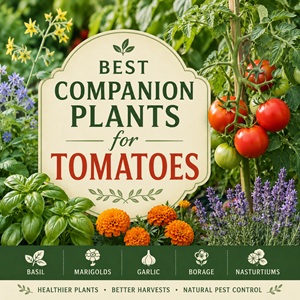
If you want healthier tomato plants and a bigger harvest this summer, companion planting can make a huge difference.
This post may contain affiliate links.
The right companion plants help deter pests, attract pollinators, improve soil health, and even enhance the flavor of your tomatoes.
Tomatoes grow especially well alongside herbs, flowers, and vegetables that support healthy growth while keeping common garden problems under control.
Whether you’re growing tomatoes in raised beds, containers, or a backyard vegetable garden, these companion planting ideas can help you create a more productive garden naturally.
Why Companion Planting Works
Companion planting is the practice of growing certain plants together so they benefit one another. Some plants repel harmful insects, while others attract pollinators or improve the soil around your tomatoes.
Benefits of companion planting for tomatoes include:
- Fewer garden pests
- Improved tomato growth
- Better air circulation and soil health
- Increased pollination
- More flavorful tomatoes
- A healthier, more balanced garden ecosystem
Using companion plants is also a simple way to reduce the need for chemical pesticides in your vegetable garden.
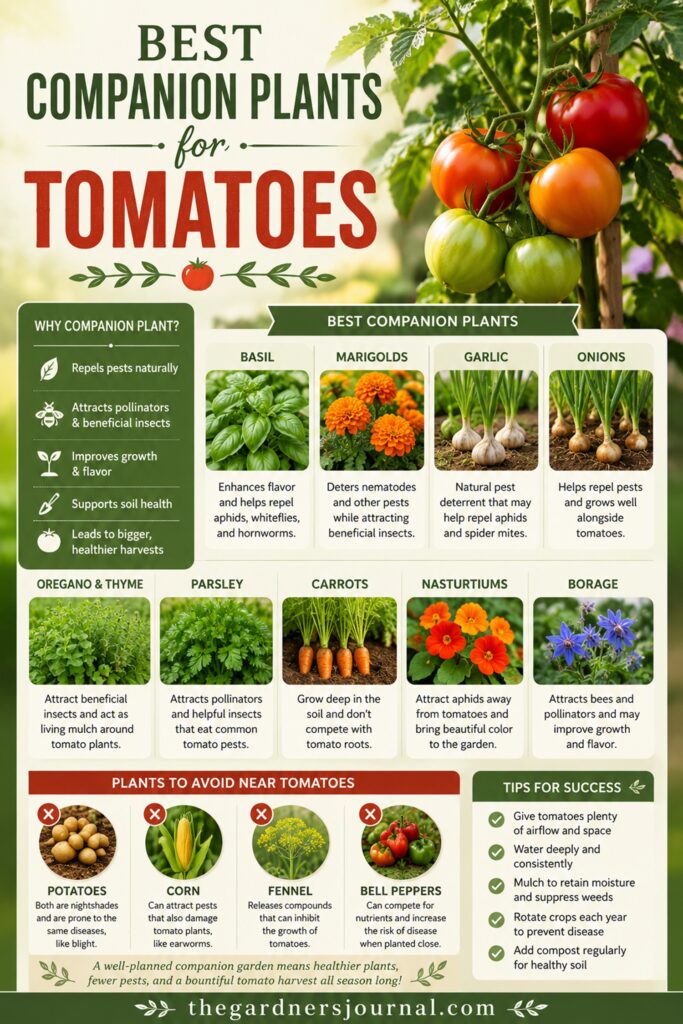
Best Companion Plants for Tomatoes
Basil
Basil is one of the most popular companion plants for tomatoes — and for good reason.
Many gardeners believe basil improves the flavor of tomatoes while helping repel aphids, whiteflies, and tomato hornworms.
Because basil enjoys the same warm growing conditions as tomatoes, they grow beautifully together in garden beds and containers.
Marigolds
Marigolds are a classic companion planting flower for vegetable gardens. Their strong scent helps deter nematodes and other common garden pests, while their bright blooms attract beneficial pollinators.
Plant marigolds around the edges of your tomato beds for both beauty and protection.
Garlic
Garlic works as a natural pest deterrent in the garden. Its strong smell may help keep spider mites, aphids, and other insects away from tomato plants.
Garlic also takes up very little space, making it easy to tuck between tomato plants.
Onions
Like garlic, onions can help repel pests while growing well alongside tomatoes. They’re a great option for maximizing space in raised beds and small gardens.
Oregano and Thyme
These low-growing herbs make excellent tomato companions. Oregano and thyme attract beneficial insects while acting as living mulch around tomato plants.
They also help fill empty spaces in the garden beautifully.
Parsley
Parsley attracts pollinators and beneficial insects like hoverflies, which feed on aphids and other harmful pests.
It’s an easy herb to grow near tomatoes and works well in cottage garden-style vegetable beds.
Carrots
Carrots and tomatoes grow well together because they use different parts of the soil. Tomatoes grow upward while carrots grow deep underground, reducing competition for nutrients.
Nasturtiums
Nasturtiums act as a trap crop by attracting aphids away from your tomatoes. Their colorful flowers also bring pollinators into the garden and add a beautiful cottage garden feel.
Borage
Borage is a favorite companion plant for tomatoes because it attracts bees and other pollinators. Many gardeners also believe it helps improve tomato growth and flavor.
Its star-shaped blue flowers make it especially beautiful in summer vegetable gardens.
What Not to Plant with Tomatoes
Not every plant grows well near tomatoes. Some plants compete for nutrients or attract harmful pests and diseases.
Avoid planting tomatoes near:
Potatoes
Tomatoes and potatoes are both part of the nightshade family, making them vulnerable to many of the same diseases, including blight.
Corn
Corn can attract pests that also damage tomato plants, including corn earworms and tomato fruitworms.
Fennel
Fennel releases compounds that may inhibit the growth of nearby plants, including tomatoes.
Bell Peppers
Although peppers are closely related to tomatoes, they can compete for nutrients and increase the risk of disease spread when planted too closely together.
Tips for Successful Tomato Companion Planting
To get the best results from companion planting:
- Give tomato plants plenty of airflow by spacing them properly
- Plant flowers nearby to attract pollinators
- Use mulch to help retain moisture
- Rotate crops each year to reduce disease problems
- Water deeply and consistently
- Add compost regularly to improve soil health
Companion planting works best when combined with good overall garden care.
Creating a Thriving Tomato Garden
A thoughtfully planned companion garden can help your tomatoes thrive naturally all season long.
Pairing tomatoes with herbs like basil and oregano, flowers like marigolds and nasturtiums, and vegetables like onions and carrots creates a healthier and more productive garden space.
Whether you’re growing a large backyard garden or a few tomato plants in containers, companion planting is an easy way to support stronger plants, fewer pests, and bigger harvests all summer long.
More Container Gardening Ideas
- How to Grow Peas in Containers
- How to Grow Cucumbers in Containers
- How to Grow Zucchini in Containers
- Growing Greens in Containers
Follow my companion planting board on Pinterest.