Bee balm is one of the best plants you can add to a pollinator garden. Its colorful flowers attract bees, butterflies, and hummingbirds, and once established, bee balm can provide a beautiful display all summer long.
This post may contain affiliate links.
But bee balm is also a vigorous perennial that needs room to spread. When choosing companion plants, the biggest concern isn’t that certain plants are inherently “bad” for bee balm—it’s that some plants can compete for space, sunlight, water, or nutrients.
Here are some plants I would think twice about planting directly alongside bee balm.
1. Mint
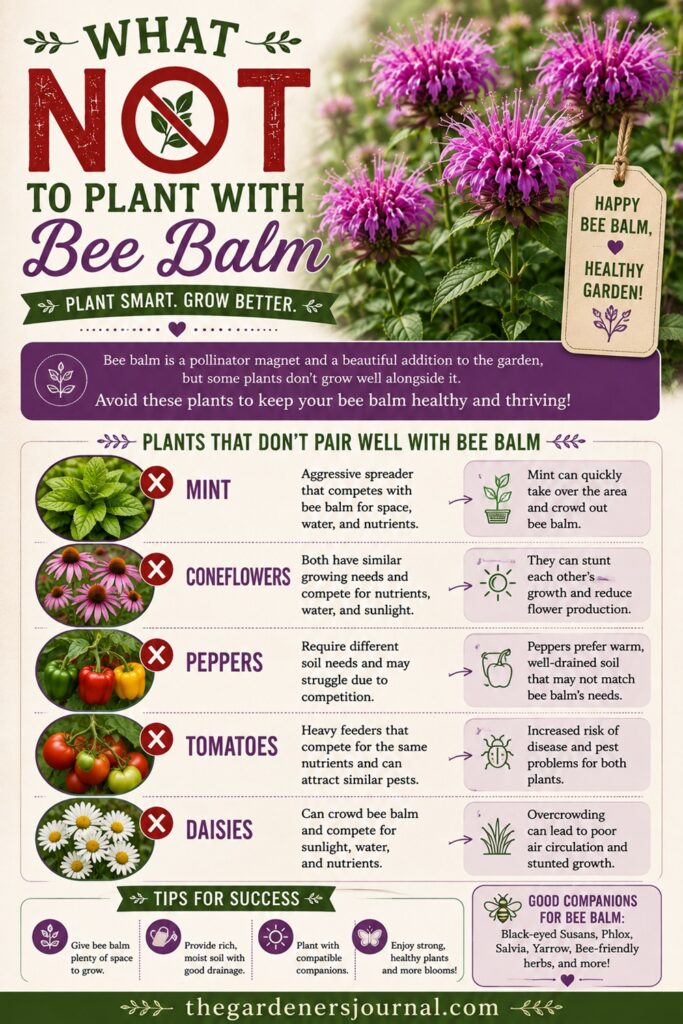
Mint and bee balm are both vigorous growers, which makes this a combination I wouldn’t recommend in a small garden bed.
Mint can spread aggressively through underground runners and quickly occupy the space around other plants.
Bee balm also spreads, so planting the two together can create a situation where you’re constantly trying to keep one from crowding the other.
Better idea: Grow mint in a container or its own designated area.
2. Coneflowers
Coneflowers and bee balm are actually wonderful plants for a pollinator garden, so this isn’t a case of the plants being incompatible.
The problem is space.
Both can become substantial, upright perennials, and both prefer plenty of sunlight and good air circulation. If planted too closely together, they can become crowded and compete for resources.
If you have enough room, you can absolutely grow them together. Just give each plant plenty of space.
3. Peppers
Peppers aren’t inherently bad companions for bee balm, but they have very different growing habits.
Peppers are warm-season vegetable plants that generally prefer rich, well-drained soil and consistent moisture. Bee balm is a perennial herbaceous plant that can become quite large as the season progresses.
In a small vegetable garden, planting bee balm directly among peppers can make harvesting and maintaining the pepper plants more difficult.
Bee balm can also attract a tremendous number of pollinators, which is wonderful—but you may prefer to keep your pollinator plants in a separate garden area from your vegetable rows.
4. Tomatoes
Tomatoes are another plant that can become crowded when planted too close to a mature bee balm plant.
Tomatoes need plenty of sunlight, good air circulation, water, and nutrients. Mature bee balm can spread outward and create additional competition for space.
Rather than planting bee balm directly beside tomatoes, consider placing it along the edge of your vegetable garden where it can attract pollinators without crowding your tomato plants.
5. Daisies
Daisies and bee balm can both make excellent pollinator plants, but they can also create a crowded perennial bed if planted too close together.
Both need adequate sunlight and room to grow.
If you love the combination, you don’t necessarily have to avoid it. Simply give the plants enough space to mature without growing into one another.
Why Spacing Matters With Bee Balm
One of the most important things to understand about bee balm is that it can spread.
A small plant at the garden center can turn into a substantial clump after a few growing seasons.
Good spacing helps:
- Improve air circulation
- Reduce overcrowding
- Give plants access to sunlight
- Reduce competition for water and nutrients
- Make pruning and maintenance easier
- Keep the garden looking tidy
Bee balm also benefits from good air circulation because it can be susceptible to powdery mildew, particularly when grown in crowded or poorly ventilated conditions.
Does Bee Balm Need Companion Plants?
Not necessarily.
Bee balm can grow beautifully on its own or as part of a larger perennial or pollinator garden.
Instead of worrying about finding the perfect companion plant, focus first on giving bee balm the conditions it needs:
Full sun: Bee balm generally performs best with plenty of sunlight.
Good soil: Provide reasonably fertile, well-drained soil.
Adequate moisture: Don’t allow young plants to become excessively dry.
Good air circulation: Give mature plants room to breathe.
Space to spread: Remember that bee balm can become much larger than it appears when first planted.
Better Companion Plants for Bee Balm
If you’re creating a pollinator garden, there are plenty of plants that can work beautifully alongside bee balm.
Consider:
- Black-eyed Susans
- Yarrow
- Phlox
- Salvia
- Coreopsis
- Bee-friendly herbs
- Other native flowering perennials
The best choices will depend on your growing zone, soil, sunlight, and the mature size of the plants.
What About Companion Planting Claims?
You’ll find plenty of gardening lists online claiming that certain plants should never be grown near bee balm.
I’d take those claims with a little caution.
There isn’t strong evidence that tomatoes, peppers, daisies, or coneflowers are universally harmful to bee balm. In many cases, the issue is simply competition and overcrowding.
That’s an important distinction.
A plant can be a poor choice for planting directly next to bee balm without being a bad plant to have somewhere else in the same garden.
More Bee Balm Ideas
- How to Grow Bee Balm from Cuttings for a Beautiful Cottage Garden
- Deadhead Bee Balm to Keep Flowers Blooming All Summer
- How to Attract Pollinators with Bee Balm and Companion Plants
- The Best Time to Cut Back Bee Balm (and Why It Matters)
- How to Harvest and Dry Bee Balm for Perfect Tea and Herbal Remedies
Give Bee Balm Room to Grow
The biggest lesson is simple: don’t overcrowd bee balm.
If you want to grow bee balm alongside coneflowers, tomatoes, peppers, or daisies, you don’t necessarily need to remove them from your garden plan. Instead, consider mature plant size and give each one enough room to thrive.
And if you’re growing mint, I’d give that one its own container. Your future self will thank you!
Bee balm is a beautiful, useful addition to a cottage or pollinator garden, but its vigorous growth means that thoughtful placement is important.
Rather than thinking of companion planting as a strict list of plants that can or cannot grow together, think about space, sunlight, water, mature size, and air circulation.
With the right spacing, bee balm can become one of the most beautiful—and busiest—plants in your garden.tween plants, and monitor for pests and diseases for a healthy and thriving bee balm garden.