
There is nothing quite like the intoxicating scent of lilacs wafting through the air to signal that spring has truly arrived.
This post may contain affiliate links.
These beloved shrubs are a staple in many gardens, prized for their lush, fragrant clusters of purple, white, and pink flowers.
However, as quickly as those beautiful blooms appear, they eventually begin to fade and turn brown, leaving many gardeners wondering what the next step is to keep their bushes looking tidy and healthy.
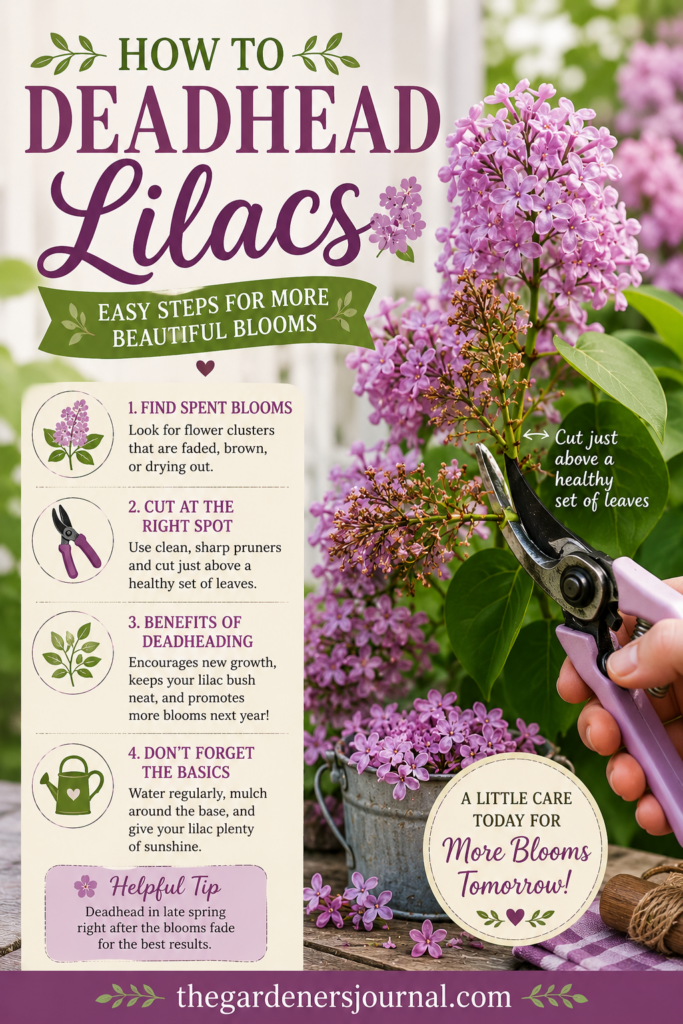
This is where deadheading comes in. While it might sound like a technical gardening term, deadheading lilacs is a simple yet essential task that involves removing spent flowers before they go to seed.
By taking a few minutes to prune away the old blooms, you’re not just improving your garden’s appearance; you’re actually helping the plant redirect its energy into root growth and the development of next year’s flower buds.
In this guide, we’ll walk you through exactly how and when to deadhead your lilacs to ensure your shrubs remain the star of your landscape for years to come.
Related Article: How to Grow Lilacs in Containers: Easy Tips for Beautiful Blooms
Step-By-Step Guide to Deadheading Lilacs
Deadheading lilacs involves picking the right time, using the best tools, and knowing the correct way to remove old blooms.
Paying attention to these details helps your lilacs stay healthy and encourages new growth for next year.
Related Article: How to Extend Lilac Bloom Time with Different Varieties for a Longer, More Colorful Spring

When to Deadhead Lilacs
You should deadhead lilacs right after the flowers have faded and started to brown. This usually happens in late spring or early summer.
Wait until you see most of the petals falling off or the flower clusters turning dry. Deadheading too early can stop the plant from producing seeds, but waiting too long may reduce new flower growth.
Check your lilacs every few days during bloom time. Deadheading promptly keeps the plant neat and helps it focus energy on growing new flowers.
Related Article: Companion Plants for Lilacs: Enhance Blooms and Boost Growth in Your Garden
Best Tools for Deadheading
Use clean, sharp garden shears or pruning scissors for deadheading lilacs. These tools make clean cuts that heal quickly and reduce the chance of damage.
If you don’t have shears, use your fingers to pinch off the spent blooms gently. Avoid pulling or twisting the stems as it can harm the plant.
Keep your tools disinfected by wiping them with rubbing alcohol before and after use. This prevents diseases from spreading between plants.
Related Article: 5 Top Mistakes to Avoid When Growing Lilacs for a Beautiful, Fragrant Garden
Proper Technique for Removing Spent Blooms
Cut back the flower clusters just below the spent blooms, near the first set of healthy leaves or buds. This helps the plant redirect nutrients to growth and next year’s flowers.
Make sure your cut is clean and angled slightly to let water run off. Avoid cutting too close to the main stem to prevent injury.
Remove only the dead flowers and do not cut the whole branch unless it is old or damaged. This way, your lilac stays strong and keeps producing flowers.
Related Article: Watering Lilacs: How Much and How Often for Healthy Blooms
Helpful Tips for Healthy Lilac Blooms
Taking good care of your lilac after deadheading helps the plant stay strong and bloom well next season. How you handle pruned flowers and avoid common mistakes can make a big difference.
Disposing of Pruned Flowers
After deadheading, it’s important to remove the spent flowers from the area. You can throw them in the compost if they look healthy and disease-free.
If the flowers show spots or signs of disease, toss them in the trash. This prevents spreading problems to your lilac or other plants.
Avoid leaving dead flowers on the ground near the lilac. They can attract pests or lead to fungal growth. A clean area helps keep your plant healthy.
Related Article: Creating a Lilac Hedge: A Guide to Beautiful and Fragrant Privacy Screens
Mistakes to Avoid When Deadheading
Don’t cut too close to a leaf bud or young shoot. You want to leave some healthy growth on the stem, or the plant might not bloom well next time.
Avoid deadheading too late in the season. It’s best to finish right after the flowers fade because late pruning can stop the plant from preparing for winter.
Never use dull or dirty tools. This can damage your lilac or spread disease. Use clean, sharp pruners each time.
Make sure you only remove the spent flower clusters, not entire branches. Taking off too much can weaken the plant.
Follow my lilacs board on Pinterest.