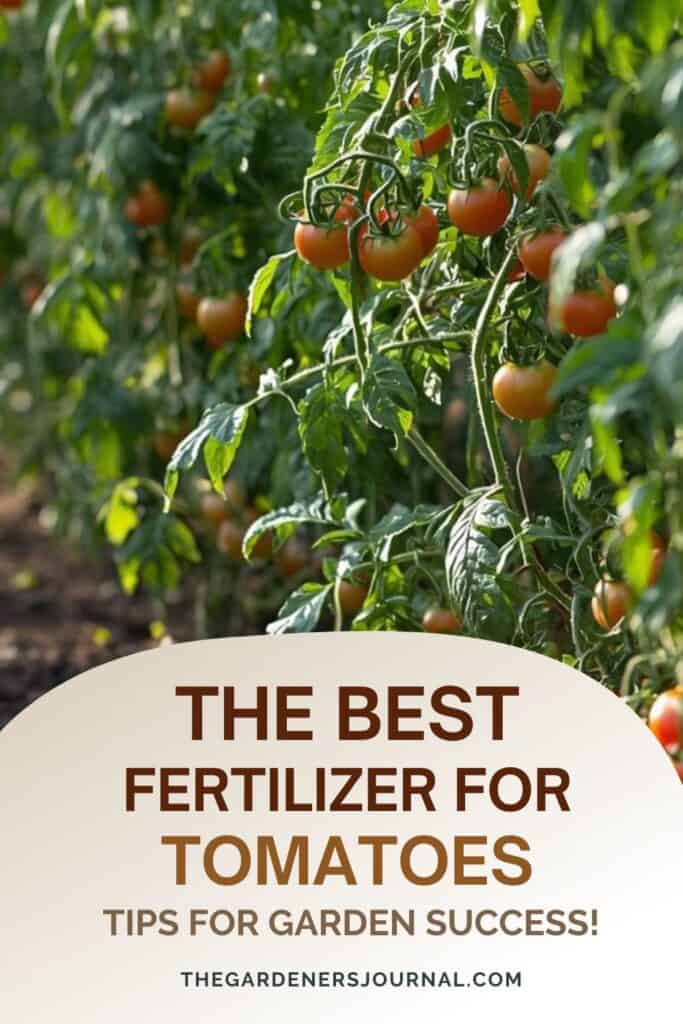
There’s nothing quite like the taste of a homegrown tomato — juicy, flavorful, and bursting with summer freshness.
This post may contain affiliate links.
But to get those picture-perfect tomatoes, your plants need the right nutrients at the right time.
Choosing the best fertilizer for tomatoes can make all the difference between a small, struggling crop and a garden overflowing with ripe, delicious fruit.
Whether you’re growing in raised beds, containers, or directly in the ground, giving your tomatoes the proper boost will help them thrive all season long.
Fertilizing tomatoes isn’t just about feeding the plants — it’s about building strong roots, encouraging healthy foliage, and supporting steady fruit production.
With so many options available, from organic compost to slow-release blends, it can be tricky to know where to start.
In this guide, you’ll learn exactly what your tomato plants need, when to fertilize them, and which products or homemade mixes deliver the best results for a flavorful, abundant harvest.
See Today’s List of Best Organic Garden Fertilizers
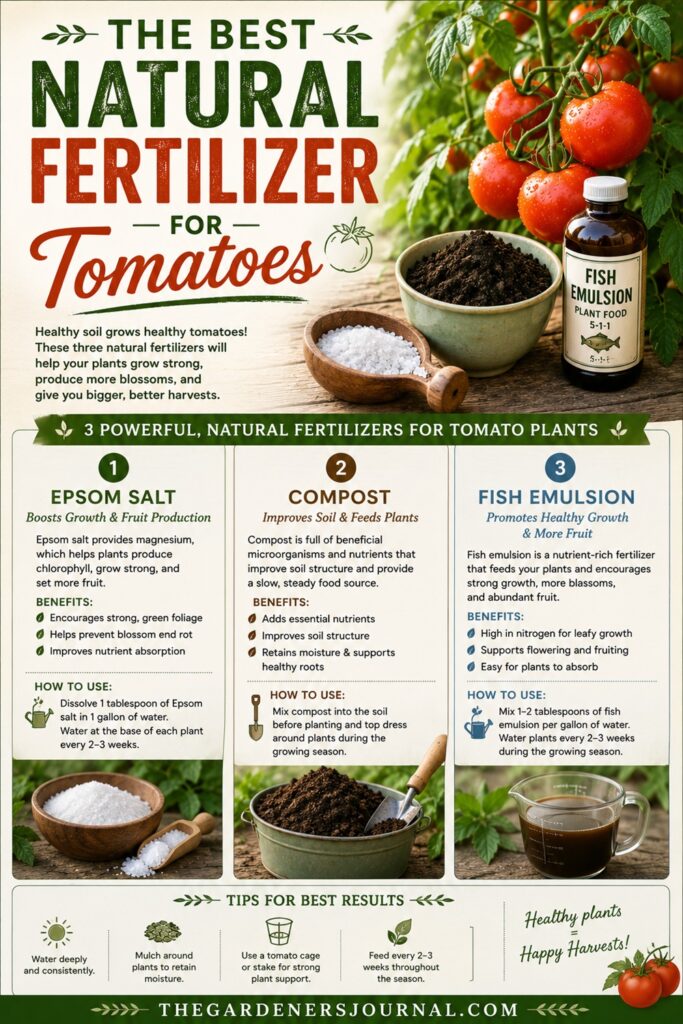
Using Epsom Salt to Fertilize Tomatoes
Many people wonder if epsom salt is a good fertilizer for tomatoes? In fact, many gardeners do use epsom salt as a homemade fertilizer for both tomato and bell pepper plants.
Epsom salt contains magnesium and sulfur, which are both very beneficial to tomatoes and bell peppers.
The magnesium helps seeds to germinate, and also helps the plant in fruit production, which is very important during growing season.
Related Article: Why Are the Bottoms of My Tomatoes Black? Causes and Solutions
Most garden soil lacks in magnesium due to soil depletion, that is why you will often see the leaves on your tomato plants turning yellow during the summer.
Applying a fertilizer that includes epsom salt will help the plants with that magnesium deficiency.
To make your own fertilizer, fill an empty gallon milk container with water and add 1 tablespoon of epsom salt to it.
Pour the mixture into a clean empty spray bottle and spray on your tomato plants. Apply this DIY fertilizer for tomato plants every 2 weeks during growing season.
You can find epsom salt in your local drugstore, or you can also order it very inexpensively online from Amazon.
Using Compost to Fertilize Tomatoes
If you like to make your own compost by saving kitchen scraps, you can use your compost to naturally fertilize your tomato plants.
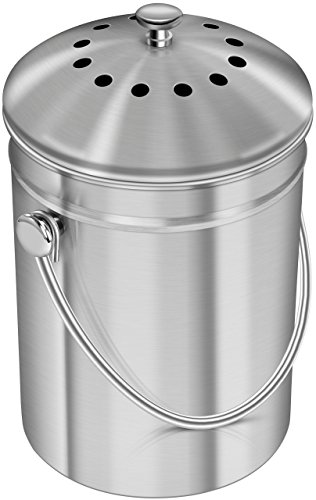
I like to use this DIY composter, but you can also find small kitchen composters inexpensively on Amazon.
Work the compost into the soil around the base of your plants monthly during growing season.
Related Article: Grow Big Tomatoes in Pots: Tips and Tricks for a Bountiful Harvest

Using Fish Emulsion to Fertilize Tomatoes
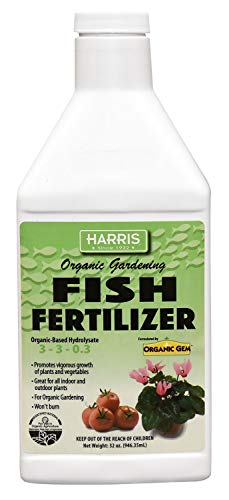
Fish fertilizer is also a great natural fertilizer for tomatoes. You learn to make your own fish fertilizer, but fish fertilizer is very inexpensive and you can order it online from Amazon and have it delivered to your door in a day or two.
Fish fertilizer aids in plant growth, helps to rebuild the soil, and offers higher production yields. You just mix it with water and spray it on your plants, apply it directly to the soil around the plants, or using a drip system.
Related Articles
- Using Epsom Salt to Fertilize Houseplants
- How to Prune Tomatoes for a Bountiful Harvest
- What Plants Benefit from Baking Soda?
- The Best Compost for Tomatoes
- How to Kill Squash Bugs
- Best Organic Houseplant Fertilizers
- Banana Peel Uses in the Garden
- Best Fertilizer for Peppers
- 5 DIY Bug Sprays for the Garden
- How to Make Homemade Plant Food
- Using Epsom Salt as a Natural Fertilizer in the Garden
Follow my Grow Your Own Food board on Pinterest.