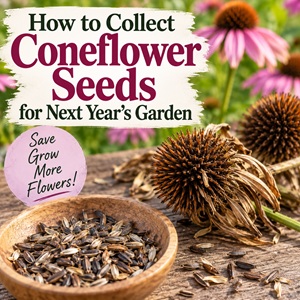
Coneflowers are one of those flowers I always want more of in the garden. They come back year after year, attract butterflies and pollinators, and look beautiful mixed in with other cottage garden flowers.
This post may contain affiliate links.
And if you already have coneflowers growing in your garden, you don’t have to buy new plants every year. You can collect the seeds from your existing plants and save them to grow more.
Saving coneflower seeds is surprisingly easy. The biggest trick is knowing when the seeds are actually ready to collect.
When to Collect Coneflower Seeds
The best time to collect coneflower seeds is in late summer or fall, after the flowers have finished blooming and the seed heads have dried on the plant.
Don’t rush this part. The seeds need time to mature.
Leave the spent flower heads on the plant until they turn brown and dry. The flower petals will have faded or fallen away, and the center of the flower will look dry and rough.
If birds are eating the seeds before you can collect them, you may want to harvest the seed heads a little earlier and allow them to finish drying indoors.
How to Tell When Coneflower Seeds Are Ready
A mature coneflower seed head will feel dry and firm rather than soft or green.
The seeds are tucked into the dried flower head. They are small and can be tan, brown, or dark in color depending on the variety.
One easy way to check is to gently rub your fingers across the dried seed head. Mature seeds should loosen fairly easily.
If the flower head is still green and moist, give it more time.
How to Collect Coneflower Seeds
You don’t need anything fancy to collect coneflower seeds.
You’ll need:
- Dry coneflower seed heads
- A paper bag or bowl
- Your fingers
- A piece of paper or shallow container for sorting
1. Choose healthy plants
Start with coneflowers that were healthy and vigorous during the growing season. If you have several plants, choose seed heads from the ones that performed especially well.
Keep in mind that seeds collected from hybrid varieties may not produce plants that look exactly like the parent plant.
If you want specific flower colors or characteristics, it’s worth knowing what variety you’re growing.
2. Wait for the flower heads to dry
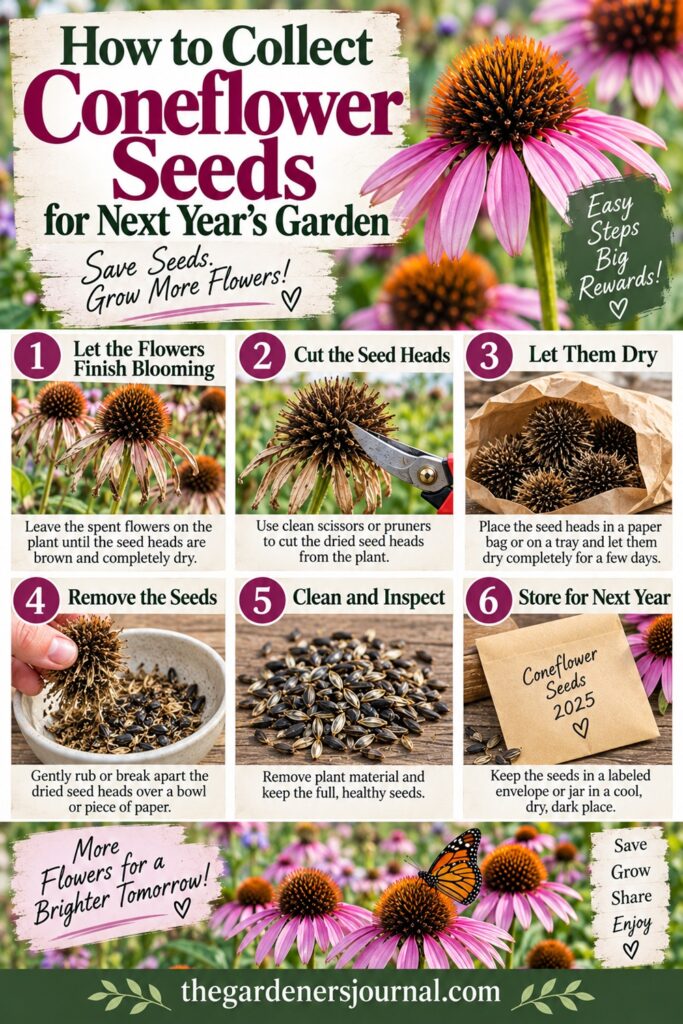
Leave the spent flowers on the plant until they are completely dry.
The dried seed heads are also useful in the garden during fall and winter because birds will often feed on the seeds.
So if you’re growing coneflowers for wildlife, consider leaving some seed heads for the birds and collecting only some for next year’s garden.
3. Cut the seed heads
Use clean scissors or garden pruners to cut the dried flower heads from the plant.
Drop each seed head into a paper bag or shallow container.
A paper bag works especially well because it allows any remaining moisture to escape.
4. Let the seed heads dry completely
If the seed heads aren’t completely dry when you harvest them, spread them out somewhere warm and dry for several days.
Good air circulation is important. You don’t want to store seeds while they still contain moisture because they can develop mold.
5. Remove the seeds
Once the flower heads are completely dry, gently rub or break them apart over a piece of paper or a shallow bowl.
The seeds will separate from the dried plant material.
You don’t have to get every tiny piece of dried flower material out. A little bit of chaff mixed in with the seeds won’t hurt anything.
6. Separate and inspect the seeds
Look through the seeds and remove any obvious pieces of plant material.
Healthy seeds should look full and mature rather than tiny, shriveled, or damaged.
If you’re collecting seeds from more than one coneflower variety, keep them separate and label them as you go.
How to Store Coneflower Seeds
Make sure the seeds are completely dry before putting them into storage.
Place them in a labeled paper envelope. You can then put the envelopes inside an airtight container for longer-term storage.
Label the envelope with:
- Coneflower variety
- Flower color
- Year collected
Store the seeds somewhere cool, dark, and dry.
A cool, dry storage area is much better than a warm, humid location. Avoid storing seeds somewhere that experiences large temperature or moisture changes.
Can You Plant Coneflower Seeds Right Away?
Yes!
You can either plant your saved seeds in the fall or store them until spring.
Coneflower seeds can benefit from a period of cold, moist conditions before germinating. This is known as cold stratification.
If you’re planning to start your seeds indoors, check the requirements for your particular coneflower variety. Some seeds germinate more readily after several weeks of cold stratification.
You can also experiment with winter sowing, which is a simple way to let nature provide the cold period for you.
For a complete guide to starting coneflowers from seed, take a look at Growing Coneflowers From Seed: A Simple Guide.
Save More Than Just Coneflower Seeds
Once you get into the habit of saving seeds, you’ll probably find yourself looking at your entire garden a little differently.
Those dried flowers that might normally look like they’re past their prime can actually be next year’s garden waiting to happen.
Zinnias are another easy flower to collect seeds from. Here’s a step-by-step guide to How to Save Zinnia Seeds for Next Year’s Garden.
And if you’re building a cottage-style garden, don’t forget about other long-lasting flowering favorites.
You can learn more about Everything You Need to Know About Growing Asters and Growing Beautiful Hydrangeas: What Every Gardener Should Know.
Saving your own coneflower seeds is one of those little gardening projects that costs almost nothing but can give you more flowers for years to come.
Leave a few seed heads for the birds, collect a few for yourself, label them carefully, and you’ll have the beginnings of another beautiful display of coneflowers for next year’s garden.
And honestly, there’s something pretty satisfying about growing new flowers from seeds you collected yourself.
Follow my Butterfly & Pollinator Garden board on Pinterest.