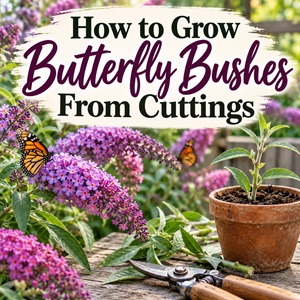
If you have a butterfly bush that you love, you may be wondering if you can grow more plants from it without buying another one.
This post may contain affiliate links.
You can! Butterfly bushes can be propagated from stem cuttings, and taking cuttings is an easy way to create new plants from an established shrub.
There are a couple of different times of year when butterfly bushes can be propagated, depending on the type of cutting you’re taking.
Softwood cuttings are generally taken earlier in the growing season, while hardwood cuttings can be taken from mid-autumn through winter, making fall a particularly useful time to propagate.
If you’re building a butterfly garden, propagating plants you already have can also be a fun way to expand your garden without purchasing several new shrubs.
Can You Grow Butterfly Bushes From Cuttings?
Yes. Butterfly bushes (Buddleja) can be propagated from stem cuttings. Depending on the season, you can use softwood, semi-ripe, or hardwood cuttings.
It can be propagated from semi-ripe cuttings in summer and hardwood cuttings in autumn.
For a fall propagation project, hardwood cuttings are the method to focus on because the current season’s growth has matured and become woody.
When to Take Butterfly Bush Cuttings
The best timing depends on the type of cutting.
- Softwood cuttings: Taken earlier in the growing season when new growth is still soft.
- Semi-ripe cuttings: Taken later in summer into early or mid-autumn, when the current season’s growth has begun to firm up.
- Hardwood cuttings: Taken from mid-autumn through late winter after the stems have become woody.
So if you’re looking for a gardening project to work on in October or November, butterfly bush propagation can fit nicely into your fall gardening plans.
What You’ll Need
For hardwood butterfly bush cuttings, gather:
- A healthy, established butterfly bush
- Clean, sharp pruning shears
- Small pots or a propagation tray
- Well-draining potting mix or propagation medium
- Rooting hormone, optional
- Water
- Plant labels
Choose a healthy plant that is free from obvious disease or pest problems. You want to start with strong, healthy stems because the cutting will be developing an entirely new root system.
How to Take Butterfly Bush Cuttings
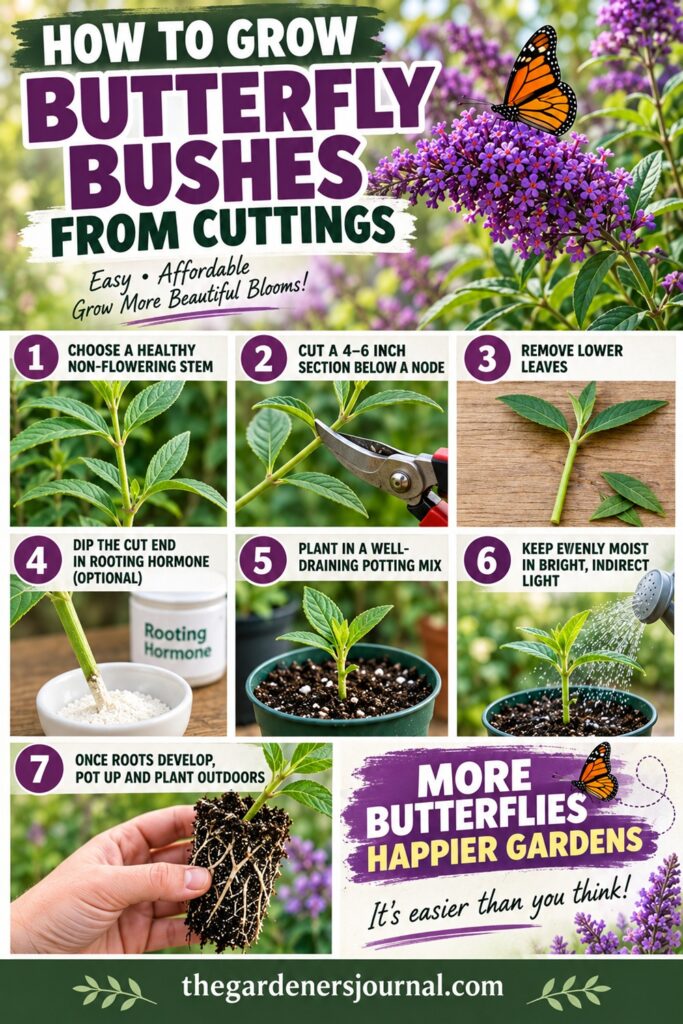
1. Choose a Healthy Stem
Look for healthy current-season growth that has become woody but is still relatively young and vigorous.
Avoid very old, thick branches as well as weak or damaged stems.
For hardwood cuttings, the stem should be firm and woody rather than soft and green.
2. Cut the Stem Into Sections
Using clean, sharp pruning shears, cut sections approximately 6 to 8 inches long.
Try to make the bottom cut just below a leaf node. A node is the point on the stem where a leaf or bud emerges.
The exact length isn’t as important as having several healthy nodes along the cutting.
3. Remove the Lower Leaves
If there are still leaves attached, remove the leaves from the lower portion of the cutting.
You’ll want a few nodes exposed so they can be planted beneath the surface.
If you’re taking true hardwood cuttings after the plant has lost its leaves, there may be very little foliage to remove.
4. Use Rooting Hormone
Rooting hormone is optional, but it can help encourage root development.
Dip the bottom portion of the cutting into rooting hormone, following the instructions on the product you’re using.
Tap off any excess before planting.
5. Plant the Cuttings
Fill a small pot with a loose, well-draining propagation mix.
Make a hole in the center of the pot with your finger or a pencil, then place the cutting into the mix with the lower nodes beneath the surface.
Firm the soil gently around the stem so the cutting stays upright.
6. Water Well
Water the cutting thoroughly after planting.
The growing medium should be moist but not soggy. Excess moisture can cause the cutting to rot before it has a chance to develop roots.
7. Give the Cuttings Some Protection
Place the pots somewhere protected from harsh weather.
For fall and winter hardwood cuttings, you don’t want them sitting in a warm room where they begin producing tender new growth in the middle of winter.
A sheltered, cool location can be more appropriate while the cuttings develop roots.
Keep the growing medium from completely drying out, but don’t keep it constantly wet.
How Long Does It Take Butterfly Bush Cuttings to Root?
Rooting time varies depending on the type of cutting, temperature, moisture, and growing conditions.
Don’t be discouraged if you don’t see new growth right away, particularly with hardwood cuttings taken in fall. They may spend much of the winter establishing roots before putting on noticeable top growth.
Once the cuttings have developed a healthy root system and begun actively growing, they can eventually be moved into larger containers or planted in the garden when conditions are appropriate.
How Do You Know If a Cutting Has Rooted?
One of the easiest signs is new growth.
You can also gently test the cutting by giving it a very slight tug. If it offers some resistance, roots may have begun developing.
Don’t pull hard, though. Newly formed roots are delicate and can easily be damaged.
Tips for Successful Butterfly Bush Cuttings
Start With More Than One Cutting
Not every cutting will root successfully. Taking several cuttings gives you a much better chance of ending up with several healthy new plants.
Keep the Growing Medium Moist
Cuttings need moisture while developing roots, but overly wet soil can cause them to rot.
Don’t Overcrowd Your Pots
Give each cutting enough room for roots to develop without competing with several other cuttings in the same small container.
Be Patient
Fall hardwood cuttings can take considerably longer to show visible growth than softwood cuttings taken during the growing season.
Label Your Cuttings
If you are propagating several varieties, label each pot. It’s surprisingly easy to forget which cutting came from which plant after a few months!
Can You Take Cuttings From Any Butterfly Bush?
It’s important to know exactly what kind of butterfly bush you have before propagating it.
Many plants sold as butterfly bush are cultivars or hybrids of Buddleja, and propagation from cuttings produces a genetic clone of the parent plant.
In other words, the new plant will have the same characteristics as the plant you took the cutting from.
However, there’s an important consideration with Buddleja davidii.
Check Before You Propagate
Although butterfly bush is popular because its flowers provide nectar for butterflies and other pollinators, some forms of Buddleja davidii are considered invasive or problematic in parts of the United States.
Pennsylvania, for example, has significant concerns about its invasive behavior, and the University of Maryland currently recommends avoiding Buddleja davidii and replacing existing plants where possible.
Butterfly bush can produce large quantities of lightweight seeds that spread easily, and its foliage isn’t a host plant for the caterpillars of most native butterflies.
Before propagating your plant, check your state’s current invasive-plant guidance.
If you do grow butterfly bush, consider a cultivar or species that is appropriate for your area, and don’t propagate or share a plant that is prohibited or invasive where you live.
And remember that a butterfly garden is much more than nectar plants. Native host plants such as milkweed are especially important for supporting butterfly life cycles.
Build a Better Butterfly Garden
If you’re creating a garden designed to attract butterflies, butterfly bush can be one piece of the puzzle—but it shouldn’t be the entire garden.
I’ve been adding more plants and growing guides for creating a welcoming pollinator and butterfly garden, and these are some of my favorites:
- Why Butterfly Bushes Are a Must-Have for Your Butterfly Garden
- Why Every Butterfly Garden Needs Milkweed
- Top 11 Butterfly-Friendly Plants for Your Garden
- How to Grow Joe Pye Weed to Attract Butterflies
- Why Every Cottage Garden Needs Verbena
You can also grow many of your favorite garden plants from cuttings. If you’re interested in trying propagation with other plants, look for these related guides on the site:
- How to Grow Roses From Cuttings
- How to Grow Bee Balm From Cuttings
- How to Grow Rhododendrons From Cuttings
- How to Grow Azaleas From Cuttings
- How to Grow Lavender From Cuttings
Growing butterfly bushes from cuttings is a simple way to experiment with plant propagation and expand an established garden.
Fall is especially useful if you’re working with hardwood cuttings, giving you a chance to get your propagation project started while the garden is winding down for winter.
Just remember to check the status of your particular butterfly bush in your area before propagating it.
And if your goal is to create a truly butterfly-friendly garden, combine nectar plants with native host plants that provide food for caterpillars.
That makes your garden more useful to butterflies throughout their entire life cycle—not just when they’re visiting the flowers.
Follow my Butterfly & Pollinator Garden board on Pinterest.