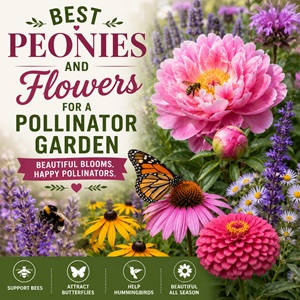
A pollinator garden does more than add beauty to your landscape. It provides essential food and habitat for bees, butterflies, hummingbirds, and other beneficial insects that help plants thrive.
This post may contain affiliate links.
By choosing a mix of pollinator-friendly flowers, you can create a colorful garden that supports wildlife from spring through fall.
Peonies are often prized for their spectacular blooms, but many gardeners are surprised to learn that some varieties can also benefit pollinators.
Combined with other nectar-rich flowers, peonies can become part of a thriving pollinator garden.
Are Peonies Good for Pollinators?
The answer depends on the type of peony.
Single and semi-double peonies are generally the best choices for pollinators because their centers remain accessible to bees and other beneficial insects.
Highly double-flowered peonies often have so many petals that pollinators have difficulty reaching the pollen and nectar.
When selecting peonies for a pollinator garden, look for varieties with open centers whenever possible.
Best Peony Varieties for Pollinators
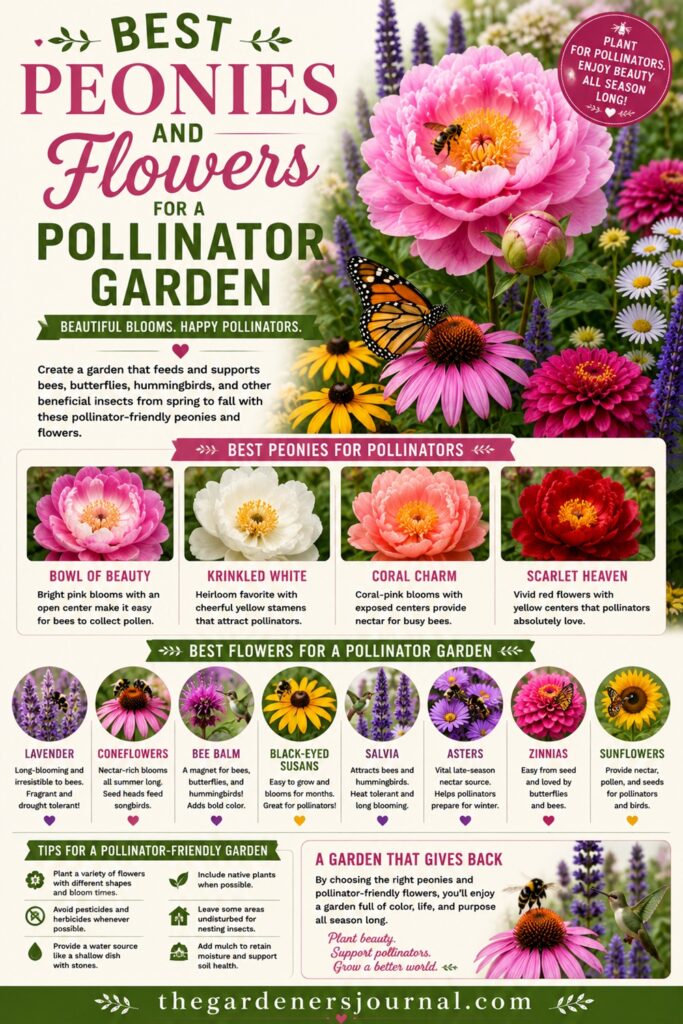
Bowl of Beauty
One of the most popular pollinator-friendly peonies, ‘Bowl of Beauty’ features bright pink outer petals surrounding a creamy center. The partially open flower structure allows easier access for bees.
Krinkled White
This heirloom variety produces large white blooms with bright yellow centers that attract pollinators during spring.
Coral Charm
Known for its coral-pink flowers that gradually fade to soft peach, Coral Charm provides both beauty and accessibility for pollinators.
Scarlet Heaven
An Itoh peony with vivid red blooms and bright yellow centers, Scarlet Heaven is highly attractive to bees and other beneficial insects.
Why Diversity Matters in Pollinator Gardens
While peonies provide valuable spring blooms, pollinators need food sources throughout the growing season.
The best pollinator gardens combine flowers that bloom at different times to provide continuous nectar and pollen from early spring until frost.
Lavender
Lavender is one of the most reliable pollinator plants you can grow.
Benefits include:
- Long blooming period
- Excellent bee attraction
- Drought tolerance
- Fragrant flowers
Lavender works beautifully alongside peonies and adds color after peony blooms begin to fade.
See also: Growing Lavender from Seed for a Cottage Garden
Coneflowers (Echinacea)
Coneflowers are among the most valuable pollinator plants for summer gardens.
Pollinators love:
- Their nectar-rich flowers
- Long bloom period
- Easy-care nature
As an added bonus, birds often feed on the seed heads later in the season.
Bee Balm
Bee balm is a favorite of:
- Bees
- Butterflies
- Hummingbirds
Its bright flowers provide a strong nectar source during summer and add bold color to cottage gardens.
See also: How to Attract Pollinators with Bee Balm and Companion Plants
Black-Eyed Susans
These cheerful yellow flowers are easy to grow and provide nectar for a variety of pollinators.
Their long bloom season helps bridge the gap between spring and fall flowers.
Salvia
Salvia produces spikes of colorful blooms that hummingbirds and bees find irresistible.
Many varieties bloom for months and tolerate hot summer weather.
Asters
Asters are among the most important late-season pollinator plants.
Their flowers provide nectar when many other garden plants have finished blooming, helping bees prepare for winter.
If you enjoy cottage garden flowers, asters are a beautiful addition to the landscape.
See also: Popular Aster Varieties for Cottage Gardens
Zinnias
Zinnias are easy to grow from seed and attract:
- Butterflies
- Bees
- Beneficial insects
Their bright blooms continue until frost and provide excellent cut flowers.
See also: How to Grow Zinnias from Seed for a Colorful Cottage Garden
Sunflowers
Sunflowers offer both nectar and pollen for pollinators while also producing seeds for birds later in the season.
Choose branching varieties for the longest bloom period.
See also: How to Grow Sunflowers in Containers (Easy Beginner Guide)
Creating a Pollinator-Friendly Garden
To attract the widest variety of pollinators:
- Plant flowers with staggered bloom times
- Include a variety of flower shapes
- Avoid pesticides whenever possible
- Provide a water source
- Leave some garden areas undisturbed for nesting insects
The goal is to provide food and habitat throughout the growing season.
Designing a Cottage-Style Pollinator Garden
Peonies fit naturally into cottage garden designs.
Try combining:
- Peonies
- Lavender
- Bee balm
- Coneflowers
- Asters
- Zinnias
- Salvia
This combination provides continuous blooms, abundant pollinator activity, and beautiful color from spring through fall.
Peonies can play an important role in a pollinator garden, especially when you choose single or semi-double varieties that provide easy access to pollen and nectar.
Combined with flowers such as lavender, coneflowers, bee balm, asters, and zinnias, peonies help create a garden that supports bees, butterflies, hummingbirds, and other beneficial insects throughout the growing season.
With thoughtful planning, you can enjoy a beautiful garden while helping pollinators thrive.
Follow my peonies garden ideas board on Pinterest.